About Our Department
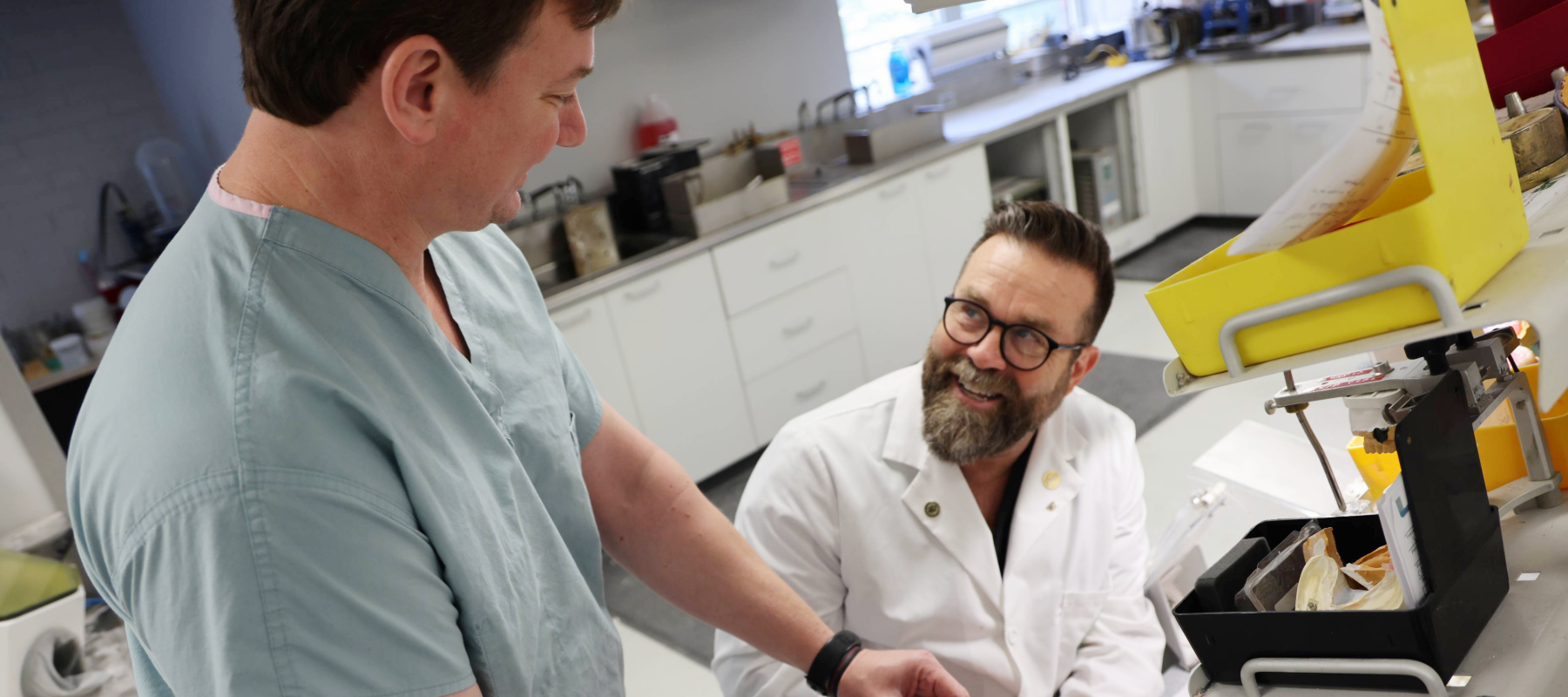
The UAB Department of Restorative Sciences advances oral health through education, patient care, research, and innovation in restorative and prosthetic dentistry.
As one of the largest academic departments within the School of Dentistry, the department plays a central role in the D.M.D. curriculum while supporting advanced training in hospital dentistry, prosthodontics, and maxillofacial prosthetics. Faculty are recognized for expertise in restorative dentistry, prosthodontics, implant dentistry, digital dentistry, biomaterials, and clinical outcomes research. Divisions include Postdoctoral General Dentistry and Prosthodontics.
Through teaching, scholarship, clinical service, and professional leadership, the department helps prepare future dentists while advancing treatments that restore oral health, function, and quality of life.
Education and Training
 The Department of Restorative Sciences plays a central role in the D.M.D. curriculum, overseeing extensive classroom, preclinical, and clinical instruction in restorative dentistry, prosthodontics, implant dentistry, oral radiology, treatment planning, comprehensive care, urgent care, and hospital dentistry.
Through these experiences, faculty help prepare future dentists to diagnose, treatment plan, and manage complex oral health needs. The department's educational mission is supported by a large network of part-time clinical faculty who contribute to student instruction and supervision across the curriculum.
Advanced training opportunities include the General Practice Residency (GPR), Prosthodontics Residency Program, and Maxillofacial Prosthetics Program. These programs provide interdisciplinary experiences that prepare graduates for advanced clinical practice, hospital-based care, leadership, and academic careers.
Clinical Care
Faculty, students, residents, and fellows provide care across comprehensive, hospital-based, urgent care, and specialty practice settings. Clinical experiences emphasize restoration of oral health, replacement of missing teeth, implant treatment, management of complex dental conditions, and care for medically complex patients.
The department supports many of the clinical experiences central to the D.M.D. curriculum, including the Comprehensive Care and Urgent Care clinics, while maintaining specialty services in prosthodontics, maxillofacial prosthetics, hospital dentistry, and advanced restorative care.
Full-time faculty may also have opportunities to participate in faculty practice through UAB Dental Group, integrating patient care with education, research, and service.
In-House Laboratories & Imaging
-
Preclinical Dentistry Laboratory
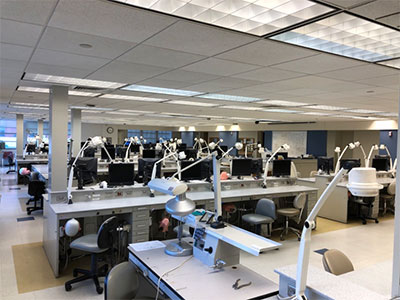
Each first- and second-year D.M.D. student has assigned space in our preclinical laboratory. The preclinical area is the primary instructional area for general and prosthetic dentistry. Each workstation has air and electric handpiece services, video monitor, and drawer storage assigned to the student. A multimedia core provides an instructional center supporting the most modern styles of education. Faculty support stations accommodate small groups of students to aid in instruction.
-
Student Laboratory
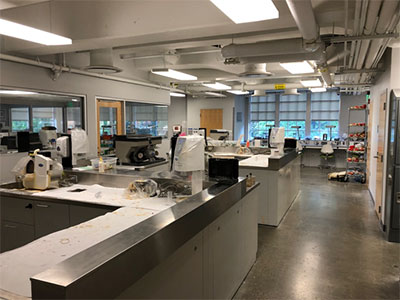
With the generous support of our alumni and friends, as well as corporate support, the Thomas Winstead Clinical Laboratory offers the latest in laboratory spaces to support our D.M.D. dental students in their laboratory work. Multi-user islands for “wet” activities are supported by comfortable workstations with excellent lighting, electric motors, and fully supplied for model work, setting denture teeth, etc. A large storage locker facility, with space for all third- and fourth-year students, is available for clinical work, instruments, and materials.
-
Technician Laboratory
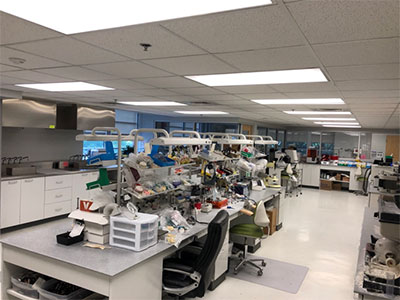
Three full-time technicians support the D.M.D. and postdoctoral programs in their restorative work. The technicians support both a teaching component of the third- and fourth-year D.M.D. students as well as the prosthodontics residents and support ongoing fabrication of dental fixed and removable conventional and implant prosthetics and restorations. Multiple 3D CAD design platforms supported with include 3Shape Dental System, Nobel Procera, and Dental Wings with a modern laboratory acquisition scanner. Additive (rapid prototyped 3D printing) and subtractive (wet/dry milling) technologies support the laboratory workflows. Specifically, a two five-axis Roland dry mills are used for Zr and PMMA applications supported by MillBox nesting CNC software and a Quatro evacuation system. Zr sintering and multiple ceramic furnaces support sintering, staining, and glazing ceramic services. For lithium disilicate milling a Planmeca wet mill supported through the Romexus integration suite provides wet-mill options for LiDS it also used to support a ‘same-day’ dentistry workflow option if desired. PFM capability is supported, and resinous patterns can be printed or milled prior to casting within the lab. Additive systems include a low visible light SLA 3D printer and a UV DLP 3D printer are used for models, surgical guides, and other dental applications. Digital workflows continue to be enhanced and supported.
-
Radiology & Oral Maxillofacial Imaging
The School of Dentistry is fully integrated into an electronic dental record, SALUD, that has been optimized for our operations and academic requirements. This is accessed by students, residents, staff and faculty throughout the school for an efficient management of our patients. X-ray capture stations are located in the clinics, and all images captured are available for through SALUD integrated with a universal viewing software system MIPACS Dental Enterprise Viewer. MIPACS is also used for all image enhancement needs of the digitally captured and stored radiographs. All of the systems throughout the school also completely HIPAA compliant.
The school of Dentistry’s radiographic services also include several state-of-the-art x-ray systems based on the technology known as Cone Beam Dental CT (CBCT) including an i-CAT Flex V17 for a 25 cm x 17 cm FOV added in spring 2018 to accommodate the expanding needs of patient treatment. Multi-planer and 3D images created from these devices may be rendered in almost limitless ways for a vast variety of diagnostic purposes unavailable to dentists previously. In digital workflows, 3D radiographic imaging is incorporated with digital impressions, scans of dental casts, patient photos, etc. to facilitate treatment planning, especially for dental implants and advanced oral and maxillofacial surgery, or for creation of restorations and prosthetics from computer-aided designs based from this data.
Research and Scholarly Activity
Faculty conduct basic, translational, clinical, and educational research that advances restorative dentistry, prosthodontics, implant dentistry, digital dentistry, biomaterials, and patient outcomes.
Restorative Sciences
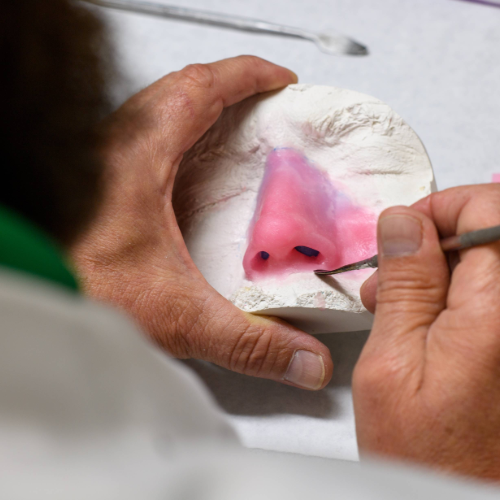
Faculty conduct research and scholarly activities focused on:
- Digital dentistry and CAD-CAM technologies
- Restorative materials and adhesive science
- Implant dentistry and implant outcomes
- Prosthodontics and maxillofacial prosthetics
- Temporomandibular disorders
- Digital workflows, optical scanning, and 3D technologies
- Biomaterials and restorative treatment performance
- Oral microbiology and biomaterials interactions
- Hospiral dentistry and care for medically complex patients
- Epidemiological studies related to populations treated in community-based health education and AIDS health care.
- Clinical outcomes and evidence-based care, including Dental PBRN projects
- Dental education and curriculum innovation
News and Recognition
The Department of Restorative Sciences celebrates the accomplishments of its people and programs through scholarly achievement, professional leadership, educational innovation, and patient care excellence.
Diego Ardenghi named head of UAB Prosthodontics Division →
Finding purpose through complex care in prosthodontics →
Givan to serve in national prosthodontics leadership role →
SOD General Practice Residency provides a 'crash-course' in dealing with complex cases →