When Dua Khan, a Master of Science in Global Health candidate at McMaster University in Hamilton, Ontario, told family and friends that she would be spending her summer in Birmingham, Alabama, she often heard the same question: Why Alabama?
Her answer was to be the first-ever participant in the Heersink Student Mobility Program at the UAB Heersink School of Medicine.
Coming from the Toronto area, Khan had never spent time in the American South and knew little about Birmingham. Ten weeks later, however, she had experienced everything from community health programs and clinical shadowing to Fourth of July fireworks, the Birmingham Civil Rights Institute, and her first taste of sweet tea.
From June 1 through August 7, she completed her graduate practicum with the UAB Comprehensive Healthy Living Research Center under the supervision of Lori Bateman, Ph.D., R.D., assistant director for the center's Partnerships & Engagement Program.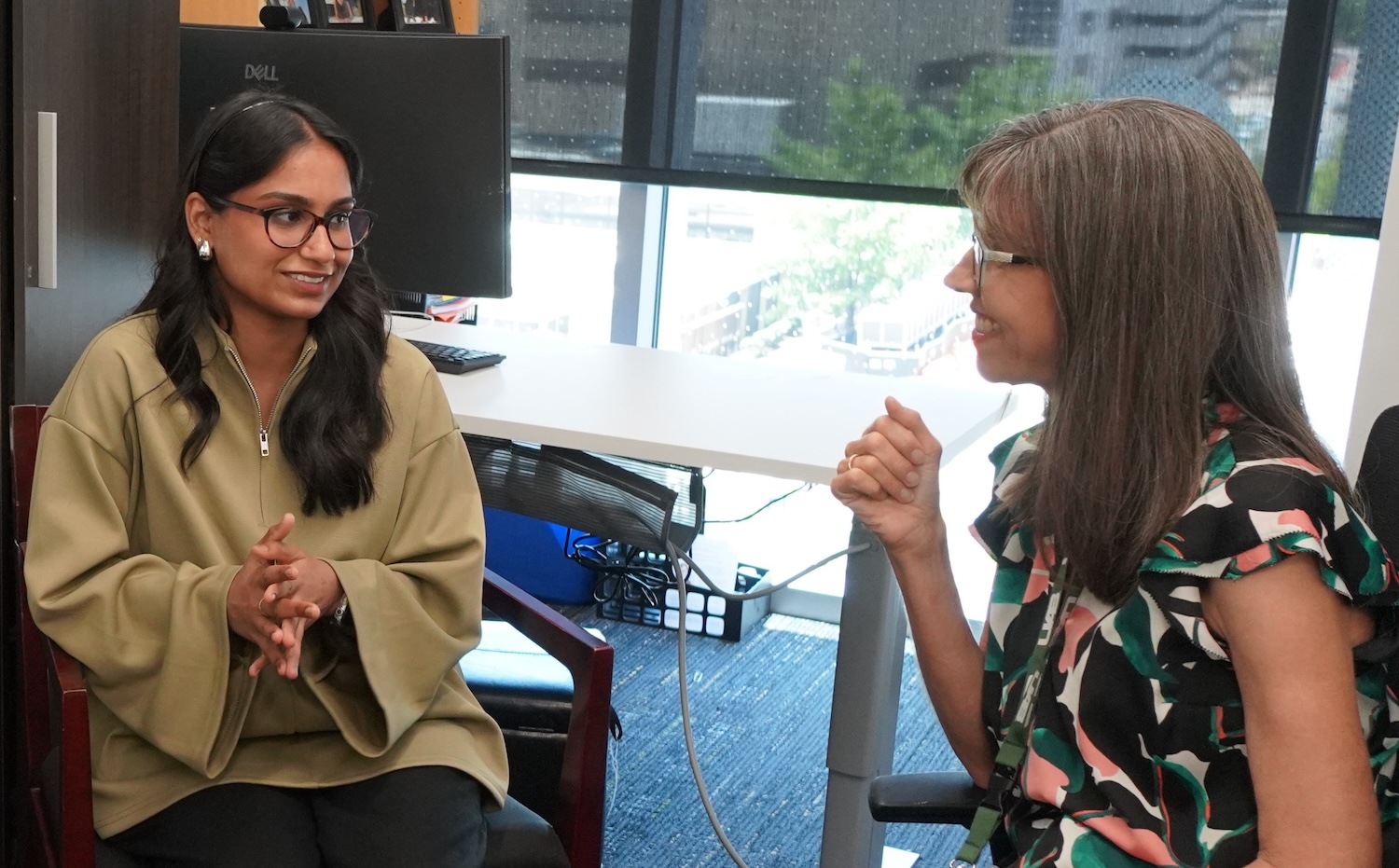
“Dua's practicum at UAB demonstrates the potential of the McMaster-UAB partnership to prepare the next generation of global health leaders,” said Deborah DiLiberto, Ph.D., MSc, director of Education at the Mary Heersink School of Global Health and Social Medicine and assistant professor of global health at McMaster University. “We are excited to see this initiative come to life and look forward to creating more opportunities for learners in the years ahead.”
The Student Mobility Program builds on a broader collaboration between UAB and McMaster that began in March 2022. Since then, the two institutions have expanded their partnership through strategic programming, educational exchanges, joint funding sources, and establishment of named centers and institutes at each university.
Seeing community health firsthand
Much of Khan's academic work at the Comprehensive Healthy Living Research Center focused on cancer screening and access to care.
Through the Breast and Cervical Navigation in Communities for Equity, or BC-NiCE, study, Khan explored access to breast and cervical cancer screening and follow-up care among African American women in Alabama. She conducted literature reviews, participated in data analysis and interpretation, met with study investigators, and developed her master's scholarly paper.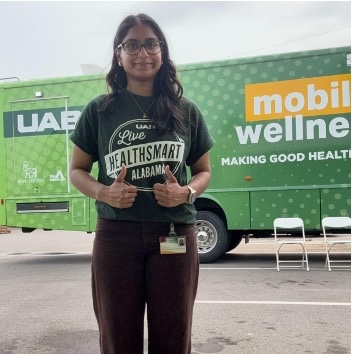
She also had the opportunity to create memorable experiences outside the research office.
Through Live HealthSmart Alabama, a program of the University of Alabama at Birmingham, Khan joined the Mobile Market and Mobile Wellness teams as they brought fresh and affordable food, health screenings, and other resources directly into Birmingham communities.
“Until you get into the community, until you're on that truck, you don't truly grasp how impactful these initiatives are,” Khan said. “When you see the impact that it has in people's lives, that's when you realize how important it actually is.”
She also saw the relationships Live HealthSmart Alabama team members had built with residents, giving the topics she had studied a more personal meaning.
“The future of improving health outcomes depends on developing leaders who can connect research, clinical care, and community engagement. Dua embraced every aspect of that experience during her time at UAB,” shared Mona Fouad, M.D., MPH, director of the Comprehensive Healthy Living Center and CEO of Live HealthSmart Alabama. “By engaging directly with the communities we serve, she gained a broader understanding of the factors that shape health, which will serve her well throughout her career.”
Finding room for research and medicine
Khan will begin medical school at the Royal College of Surgeons in Ireland after completing her master's degree. When she arrived at UAB, she knew she wanted to become a physician but was unsure how research would fit into that path.
Her summer helped her see that she may not have to choose between the two.
Through workshops, research meetings, and clinical shadowing, Khan connected with faculty across UAB. One experience brought her into the diabetes clinic of Andrea Cherrington, M.D., MPH, director of the UAB Division of General Internal Medicine and Population Science and professor of medicine.
Watching Cherrington interact with patients gave Khan a firsthand look at differences between the Canadian and American health care environments. She saw how insurance, transportation, food access, and other circumstances could influence a patient's ability to access care or follow a treatment plan.
“When you're doing research, it's not just about numbers and words and statistics,” Khan said. “These are real people that you're talking about. Real people, real stories, and every story is different.”
The experience reinforced the kind of physician she hopes to become.
“Being in the diabetes clinic and seeing these interactions happening has shown that you can't separate these two disciplines,” Khan said. “They very much go hand in hand.”
Saying yes
If there was one approach that defined Khan's summer, it was a willingness to say yes.
At a grant-writing retreat alongside experienced physicians and investigators, Khan focused on their thought processes—how they asked questions, offered feedback, and approached problems.
She also learned to ask for opportunities herself. One dinner with Bateman led to a conversation with Denyse Thornley-Brown, M.D., professor emeritus in the UAB Division of Nephrology, which then led to a visit to the Birmingham Civil Rights Institute, and eventually, an opportunity to shadow Thornley-Brown.
“I felt really shy at first,” Khan said. “But I knew that if I didn't ask, I was going to miss out on these opportunities, and I didn't want that.”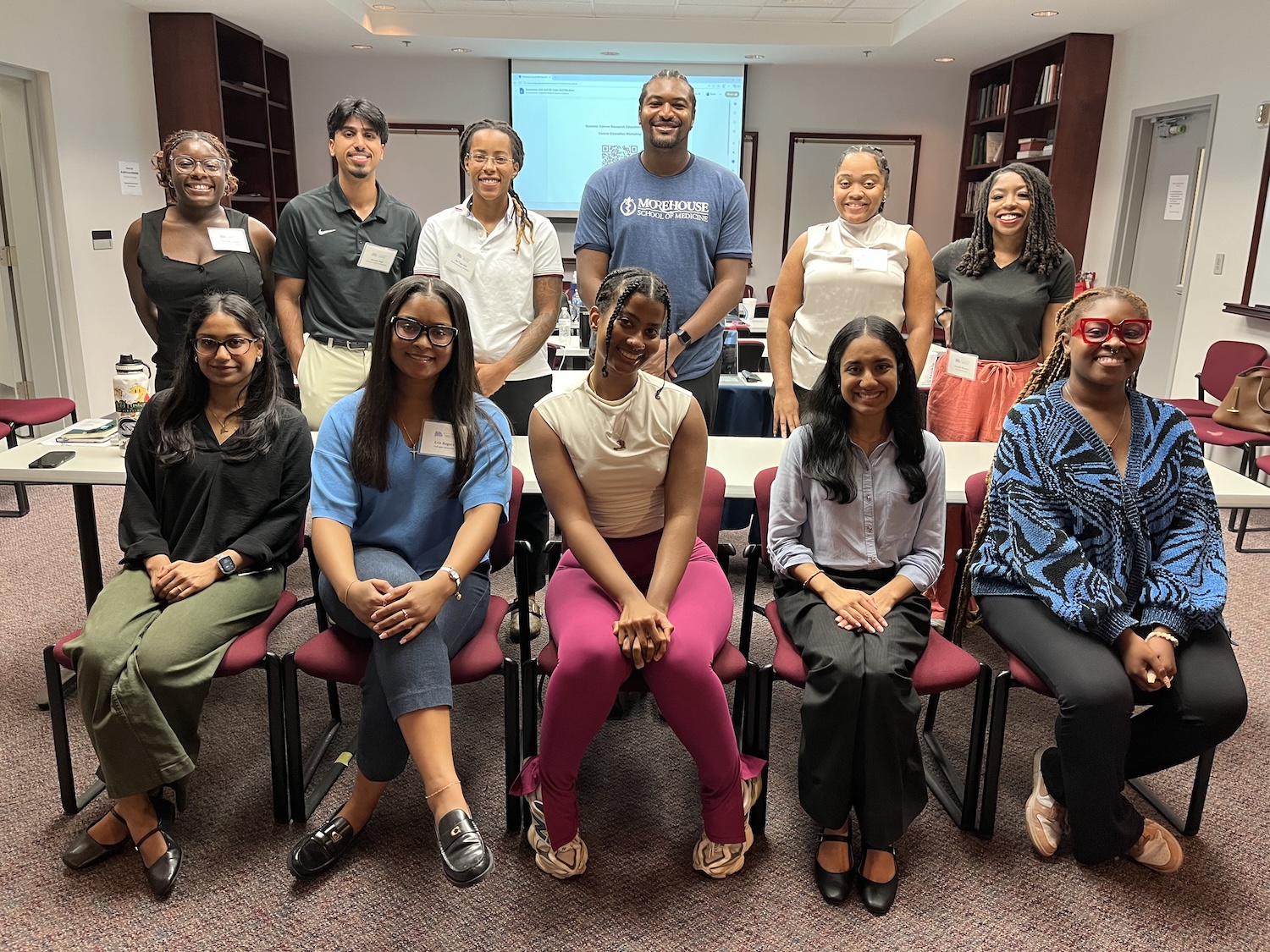
Her advice to future students is simple.
“You get 100% out of this experience what you put into it,” Khan said. “You just have to put yourself out there.”
Bateman, who worked closely with Khan throughout the program, saw that curiosity and willingness to get involved firsthand during her 10 weeks at UAB.
“It was such a pleasure working with Dua this summer in the Heersink Student Mobility Program Pilot program,” Bateman said. “She brought energy, enthusiasm, and curiosity to the various research teams with which she worked and has established professional relationships that will last well beyond the program's conclusion.”
Building connections beyond Birmingham
As the program’s inaugural participant, Khan offered an early look at what student exchanges between the two institutions can make possible.
“The Heersink Student Mobility Program marks an important initiative within our Mary Heersink School of Global Health & Social Medicine, and our collaboration with UAB,” said Sonia Anand, M.D., Ph.D., Associate Vice President, Global Health, and professor of medicine and epidemiology at McMaster. “We are proud to see Dua's accomplishments and to partner with UAB to bring the Heersinks' vision to life.”
Anupam Agarwal, M.D., senior vice president for Medicine and dean of the UAB Heersink School of Medicine, pointed to what this could mean for the partnership moving forward.
“As the inaugural exchange under this initiative, Dua's practicum marks an important step in bringing to life the Heersink vision to connect our students, faculty, and populations in ways that will only deepen the impact of the collaboration between UAB and McMaster in years ahead,” Agarwal said.
“Congratulations to Dua for piloting the Heersink Student Mobility Program,” said Alan Tita, M.D., Ph.D., associate dean for Global and Women's Health at the Heersink School of Medicine. “Her practicum with Dr. Mona Fouad, Dr. Lori Bateman, and the Comprehensive Healthy Living Research Center team, focused on access to cancer screening and follow-up care in Alabama, is exactly the kind of opportunity this program was built to create.”
As she prepares for medical school, Khan leaves Birmingham with a clearer picture of how research, community health, and clinical medicine can all have a place in the career ahead of her.
“Because of my opportunity here at UAB,” Khan said, “I'm able to see that in my future.”