The path to becoming an independent researcher requires more than learning how to conduct a study. Investigators must develop research and grant-writing skills, build strong mentorship and professional networks, and learn how to navigate the many steps involved in building a successful research career.
The UAB Comprehensive Healthy Living Research Center’s Education & Career Development Program helps current and future researchers build skills important to their career. Through workshops, seminars, and other development opportunities, students, early-stage investigators (ESI), and established researchers can enhance their knowledge, expand their networks, and advance their careers.
“Advancing health requires researchers who have the skills, experience, and support to put innovative ideas into action,” said Mona Fouad, M.D., MPH, director of the Healthy Living Center. “The Education & Career Development Program helps create that foundation, strengthening our ability to address important health challenges.”
“The idea is that we want to train the next generation of young academic scientists,” said Raegan Durant, M.D., MPH, assistant director for Education & Career Development.
Building skills across career stages
The program’s educational opportunities range from introducing undergraduate students to study principles to helping early-stage investigators and faculty sharpen their research proficiencies.
“Education & Career Development is designed to support our faculty as they develop both as investigators and as leaders in research and academic medicine. That includes their role as a mentor, their role as a leader, and their role in developing a team,” said Tapan Mehta, Ph.D., faculty program leader for Education & Career Development. “Our success is our investigators’ success, and that maps to success for our patients and communities.”
Undergraduate Students
For undergraduate students, the Cancer Research Immersion Student Program (CRISP) provides a hands-on cancer research experience. The curriculum—which is sponsored by a partnership with Moorehouse School of Medicine (MSM), Tuskegee University (TU), and the O’Neal Cancer Center at UAB—leverages both the technical skills students will need to be successful, as well as soft skills taught by mentors.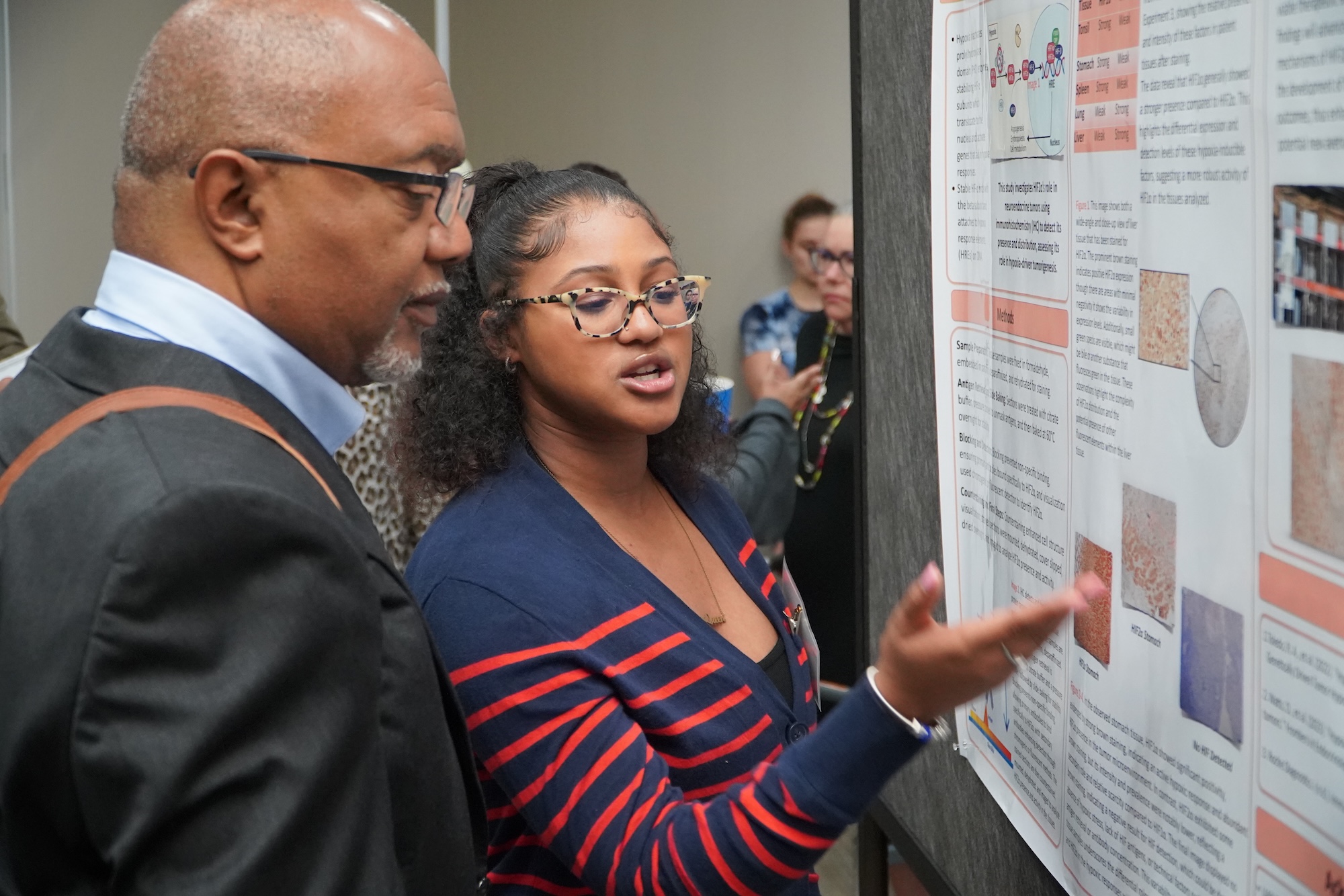
“The program really helped me figure out where I wanted to take my career, and the scientific writing classes really helped with my thesis,” said Caedmon Isaacson, MSBME, a former CRISP student.
For students like Isaacson, CRISP provides a space to begin building research skills while exploring where those skills might lead them.
Early-Stage Investigators
As investigators and junior faculty enter the early stages of their career, opportunities such as the center’s signature Health Excellence Research Education Program (HEREP) assist those pursuing community-engaged and population health research.
For those early in their career, advancing in research often means learning to turn their ideas and findings into publications and competitive grant applications. Through programs like HEREP, Education & Career Development provides training to help researchers develop those skills.
“We want to encourage and provide training on writing scientific manuscripts to submit to peer-reviewed journals for publication and then to continue submitting grant applications to get funding for their research,” explained Ann Smith, MPH, staff director for Education & Career Development.
As staff director, Smith helps manage training opportunities from recruitment and participant selection through programming and evaluation, while also tracking participants’ progress over time. That gives her and the team an opportunity to see how researchers continue advancing after participating in training programs.
“It’s thrilling to see their progress over the years and what they do,” Smith said.
The team also incorporates training that helps junior faculty consider how they approach their work and the communities involved. Through bioethics workshops, they teach people how to apply an ethical lens to their research to ensure its people-first.
Faculty Investigators
Finally, as investigators become established in their career, the Deep South Resource Center for Minority Aging Research (RCMAR) supports faculty focused on the health of older adults in the Deep South.
Development for all career stages
While some programs can be specific to a researcher’s career stage, the team also offers opportunities, such as the Insight Sessions: Research Methods and Analysis lecture series, that is open to all and provides training in quantitative, qualitative, and mixed methods approaches.
Practical experience is another part of that development. Another opportunity is an annual grant-writing retreat that brings together participants from multiple training programs to receive feedback on grant proposals they are developing.
The experience not only helps participants strengthen their proposals but also introduces them to the process of submitting work for review, receiving critiques, and incorporating that feedback into future drafts.
“There certainly are the technical aspects of what goes into a grant, but it’s helping to teach them what we all call grantsmanship,” Durant said. “They oftentimes are skills that have to be developed in exercises like this, where you’re able to share your work, have it critiqued, and then come back for more iterative efforts at improving it.”
Experiences like the retreat are intended to build skills researchers can continue refining as they pursue funding and take on greater independence in their careers.
Beyond the technical skills
Developing research expertise, however, is only one part of building a successful career. Education & Career Development also connects investigators with mentorship and networking opportunities and provides research navigation for early-stage investigators, including guidance related to financial and regulatory processes and tenure and promotion.
“We want to make sure that they have appropriate mentorship,” Durant said. “Even if we’re not providing that directly, we want to make sure that we create forums and foster an environment where they can initiate those relationships with content and methodological experts in their fields.”
Together, those resources allow the program to support not only what investigators learn, but also how they continue developing throughout their careers.
Request Education & Career Development for your study
Whether you are seeking training opportunities, research guidance, mentorship, or support for a training grant, the Education & Career Development Program can help. The program partners with researchers, trainees, and faculty to build research skills, connect investigators with resources and mentors, and support the development and delivery of education and training activities that strengthen the research workforce.
To learn more about the Education & Career Development Program or request services, visit the Education & Career Development webpage.