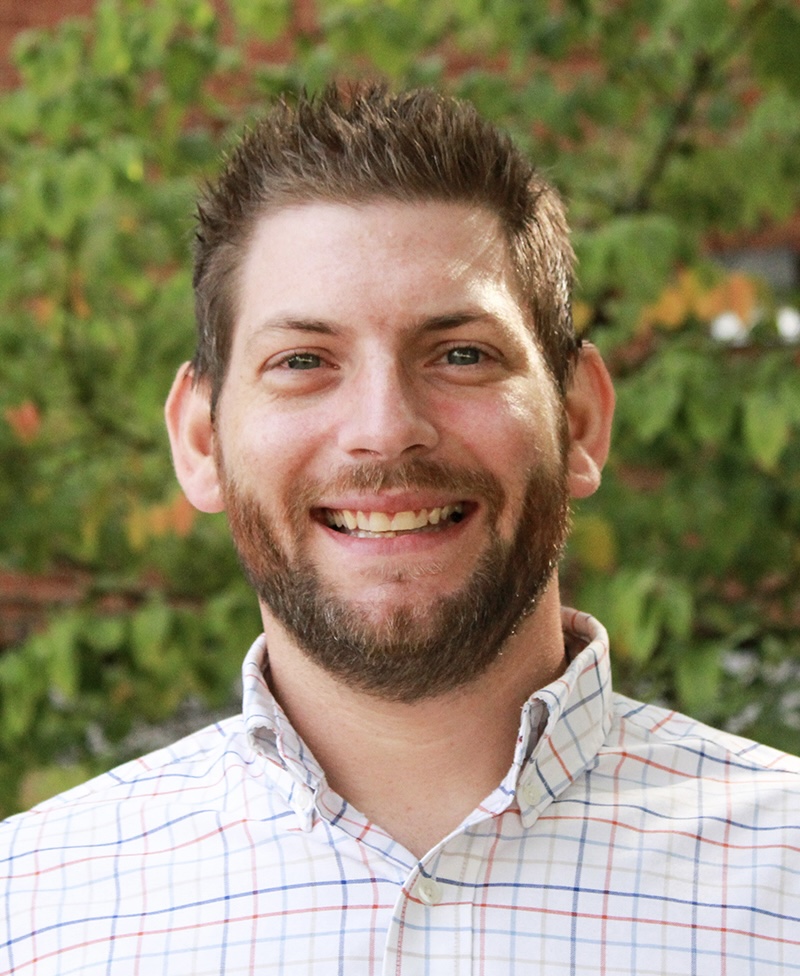
When Dr. Chris Ballmann discusses his work, it becomes immediately clear his research isn’t just an academic pursuit; it’s personal. His work sits at the intersection of music, exercise science, neurological conditions, and human motivation. And as he carefully builds a new line of inquiry at UAB and the CEDHARS Lab, he does so with a deep sense of purpose grounded in both scientific curiosity and lived experience.
For nearly a decade, Ballmann, a lifelong musician himself, has studied how self-selected music enhances exercise performance in athletes and healthy individuals. But when he arrived at UAB, he felt a pull toward something bigger. The same mechanisms that help an athlete push through a sprint, he realized, might also help someone living with Parkinson’s disease initiate and sustain movement. The pathway from performance enhancement to disability health wasn’t just logical; it felt like a calling.
“I grew weary of only helping people increase their bench press performance,” he said with a laugh. “I knew there was more power in music—more opportunity to help people in meaningful ways.”
That shift in perspective set the stage for one of his latest publications, “Implications for the Ergogenic Benefits of Self-Selected Music in Neurological Conditions: A Theoretical Review,” which synthesizes what he’s learned about personalized music during exercise and outlines how those mechanisms may translate into clinical benefit.
Translating From Athletes to Neurological Conditions
The premise of Ballmann’s theoretical review is that if self-selected music reliably improves physiological and psychological responses in healthy individuals, could those same mechanisms help people who face barriers to exercise due to neurological conditions?
In athletes, self-selected music (SSM) has been shown to increase neural drive, induce sympathetic stimulation, improve muscular performance, reduce fatigue, and enhance motivational factors.
These changes don’t just make exercise easier; they help people push past thresholds they might otherwise avoid.
Ballmann believes these same mechanisms could meaningfully support people with Parkinson’s disease, multiple sclerosis, dysautonomia, chronic pain, and other conditions that limit exercise tolerance.
His paper proposes a clear, anticipatory framework for clinicians and researchers to begin applying SSM as a therapeutic tool, one that requires no specialized equipment, no proprietary technology, and no clinical certification.
“Music and exercise together have this unique, systemic ability to improve health,” he said. “It’s unlike other therapies that may target one system. Music touches many systems at once.”
This, he argues, is why SSM may be especially powerful in disability health and rehabilitation: it’s practical, low-cost, accessible, and easily personalized.
Why Self-Selection Matters
One of Ballmann’s strongest and most consistent findings across his body of work is the importance of preference. Whether it’s the genre, tempo, rhythm, or even volume, the music must be individualized to the person to maximize its effect.
“Music is one of the most individualized things in the world,” he said. “What motivates one person could be German metal, and another might choose the Beach Boys.”
His research standardizes the selection by prompting participants to choose the one song they would use if they had to perform their best physically. For exercise-related applications, tempos above 120 beats per minute provide the stimulatory response needed to increase arousal and motivation.
“Sometimes the biggest hurdle of exercise is getting motivated to get started,” he said. “If strategically using someone’s favorite music can help them initiate physical effort for exercise, or sustain it once they begin, that could make a huge difference in helping people attain the health benefits of exercise.”
Research Rooted in Motivation and Personal Experience
Ballmann’s current and upcoming projects are particularly focused on Parkinson’s disease, a population he feels connected to in a profound way. He shared that he lives with an invisible disability, and individuals with his condition have a statistically higher likelihood of developing Parkinson’s later in life.
That reality shifted something in him.
“I’m an evidence-based person,” he said. “And the evidence suggests people with my disability are much more likely to develop Parkinson’s later in life. I’m not going to wait for Parkinson’s to become personal to me. I’m going to make it personal now through my research.”
“For me, research has to be personal,” he said. “Otherwise, you lose sight of the population you’re trying to help. Music and exercise have helped me all my life. I believe it may help others, too.”
Dr. Ballmann and his colleagues are currently trying to pinpoint the brain structures activated by music in individuals with Parkinson’s. Their long-term goal is to understand how personalizing music may stimulate the areas of the brain responsible for motivation and physical effort to help people with Parkinson’s disease exercise better.
Another line of research aims to determine whether personalized music can increase tolerance for high-intensity exercise, shown to be particularly beneficial, yet difficult, for people with Parkinson’s.
He is also expanding into chronic pain populations through partnerships with physical therapy clinics to test whether personalized music can enhance outcomes and reduce pain during rehabilitation tasks.
The unifying theme across all these projects is reducing barriers to movement through something people already love and understand: music.
The Music That Moves Us Forward
For Ballmann, the power of music lies not just in its rhythm or tempo, but in the emotional bridge it builds between researcher and participant, between science and lived experience, between intention and action.
“Most people love music,” he said. “When you can share that with someone, it becomes a human connection, not merely a research connection.”
That human connection is at the heart of every study he launches and every framework he designs. And as his research continues to grow, he is building not just a new scientific paradigm, but a more accessible, more empathetic future for rehabilitation science – one curated playlist at a time.