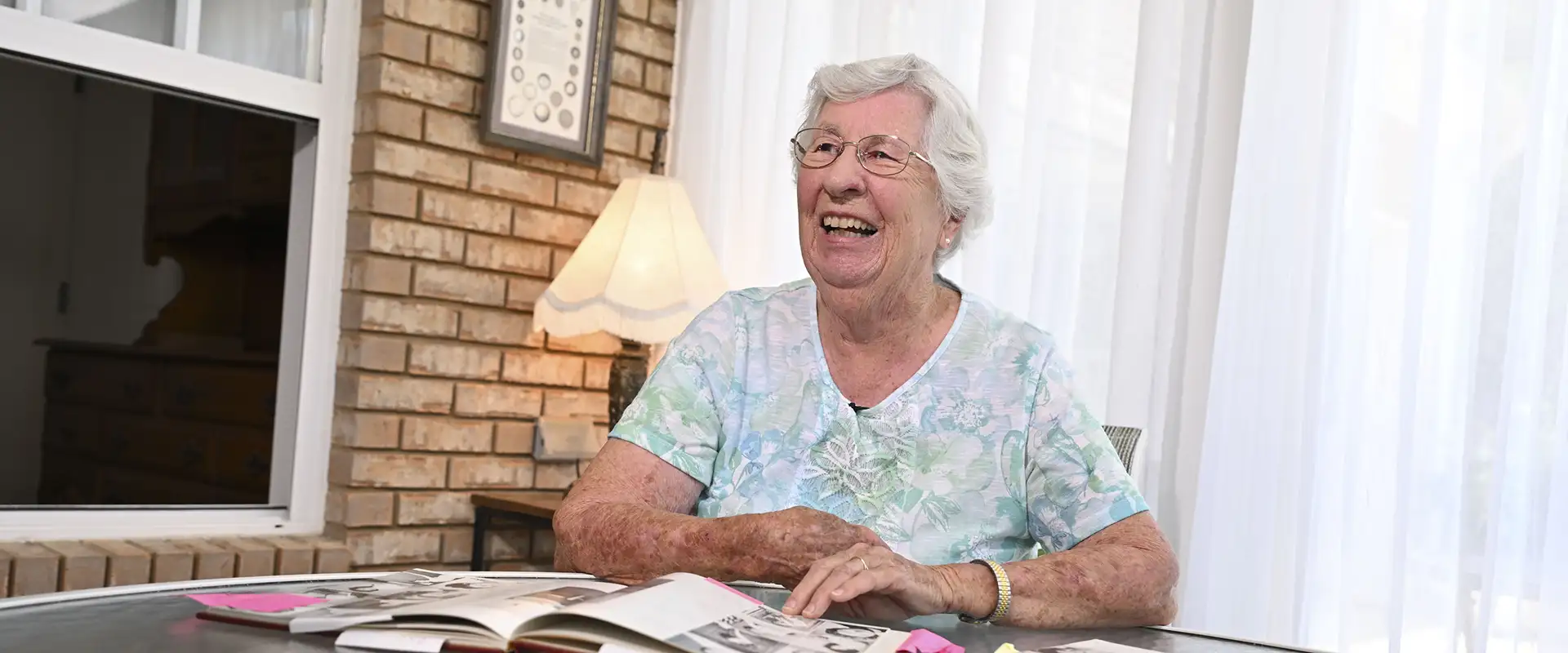
Five Questions with Alumna Nita Davidson
Nita Williamson Davidson, PhD, RN (BSN 1955, MSN 1962), is a graduate of what is now the University of Alabama at Birmingham School of Nursing. As a new graduate, she began working as a bedside nurse at Birmingham Baptist Hospital. A few months into her first nursing job, the Director of Nursing at the hospital, Ida V. Moffett, recruited her to join the faculty at the Birmingham Baptist Hospital School of Nursing, thus launching Davidson’s career as a nurse educator. After receiving a master’s degree and three years of teaching at Baptist, she was hired to teach junior level Medical Surgical Nursing at UAB.
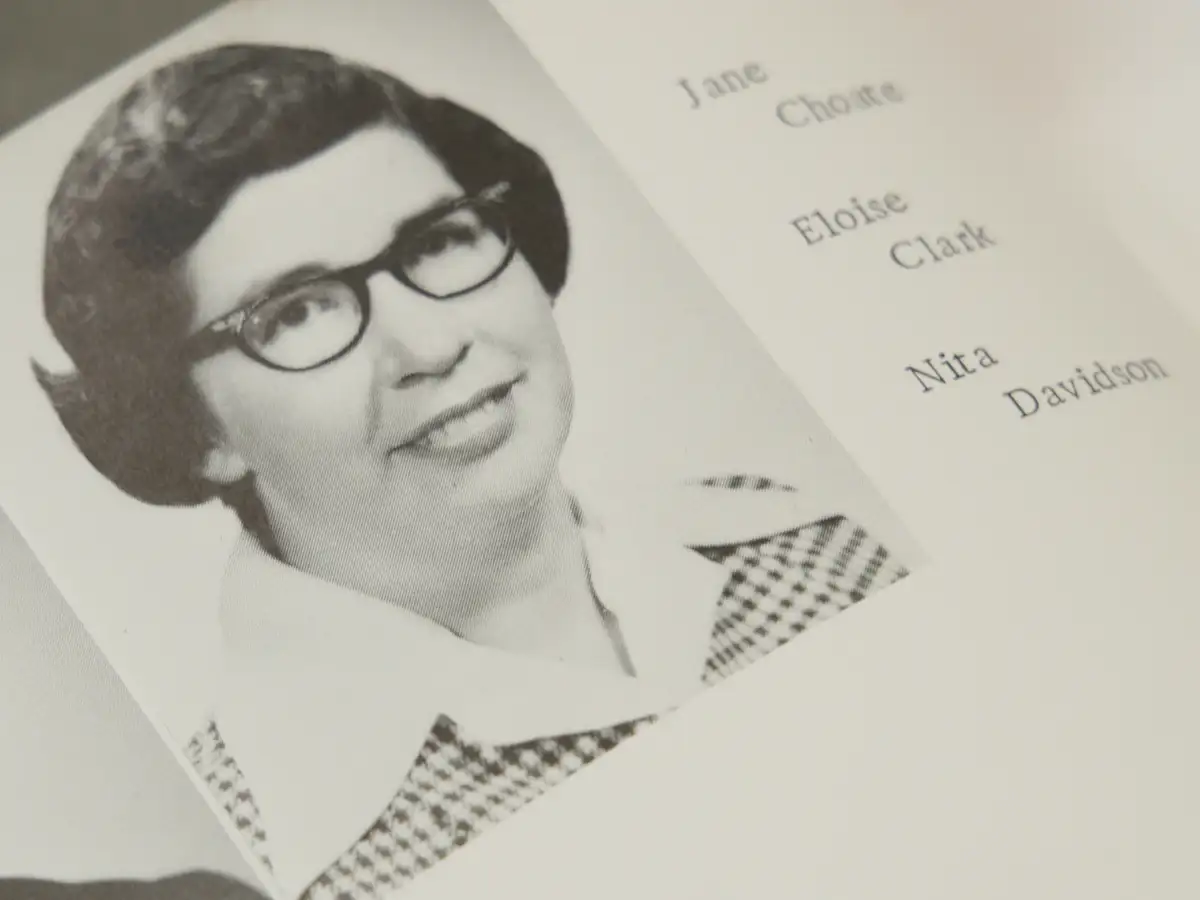
As the School’s programs, faculty and student population experienced exponential growth, Davidson believes her capabilities as a nurse and nurse educator grew in tandem. She played a crucial role in developing the School’s Nurse Practitioner Certification education in 1972 and was later recruited by the University of Florida College of Nursing to implement a similar curriculum as their Chair of Graduate Programs. During her tenure at Florida, she also served at the National Institutes of Health as a nursing expert. Seventy years after graduating with her BSN, Davidson reflects on her time as a nursing student, the evolution of nursing education and the UAB School of Nursing’s 75-year legacy.
1. What inspired you to get your BSN in 1955, and what stands out to you about that time?
When I was a little girl, I had only seen one nurse. I remember she was wearing a white dress and white shoes, and I thought she was so glamorous but that was all I knew about nursing. When I was older, Shelby County sent out a home agent through Auburn University who came and taught home nursing care, so I had a basic understanding of nursing then. My older sister was a math major, and my younger sister wanted to be a journalist, and I knew I didn’t want to do whatever they did, so I decided to give nursing a try. I didn't know that nursing was being taught in colleges at that time, so I enrolled as a biology major at the University of Montevallo. I heard that University Hospital had a school of nursing. The Director of Nursing at University Hospital, Katherine Crossland, told me about the new nursing program starting in Tuscaloosa. She sent me to meet with Dean Florence Hixson. After that visit with Dean Hixson, I transferred there.
I have always appreciated the fact that Dean Hixson provided an individual program of study for me. She was soft-spoken, yet very direct. There was something about her that made you want to do your best. Another person who made an impact on me was the School’s second faculty member, Lyndon McCarroll. She was not very traditional, but she taught us that you could be different, and you could be creative. You did not always have to follow the traditional mold to make a worthy contribution.
2. How have you seen the nursing profession evolve in the last 70 years?
At the time I entered nursing, nurses very quietly went about their work and were not often involved with other disciplines. The profession has totally changed and a lot of that has to do with how women have changed from ‘knowing their job’ to being true change agents. Over time, we all saw that there was more to nursing than just doing chores. People started to realize that nurses could make informed health care decisions and that it was safe for them to do so. The type of patients that nurses care for has also changed. In the past, you had to be really sick or have undergone a traumatic event to get hospital care, and thankfully that is far from the case now. The hospitals also have changed tremendously. Now, there is more of an emphasis on patient education and keeping people healthy when they leave, so they do not have to keep coming back.
3. You’ve devoted the majority of your career to nursing education. What were the early days of teaching BSN students like?
While technology, curriculum and clinicals have changed dramatically since I began teaching, it has always been so fulfilling. As an educator, the success of my students was my reward, and I was always so pleased when they graduated and went on to make an impact in health care. When I started teaching nursing students, we taught through demonstrations. I would go to the hospital and take care of patients with the students. I was often told not to bring students to the hospital unit. The baccalaureate program was new, and people did not know the difference between BSN nurses and diploma trained nurses, so we had to do a lot of negotiating. I would ask to bring four students at a time and promise not to get in anyone’s way! By the end of the semester, we would always be asked back and our students were the first ones the hospital wanted to hire, so I knew it was worthwhile. We had an awareness that we were paving the way, so we were careful.
4. You and your colleagues were trailblazers in nursing education. Did you face any opposition along the way?
I got ‘no’s’ often in my career, but I always tried to remain polite and keep moving forward. When I was interviewing to get my PhD in educational psychology, one of the men on the interview committee told me they did not want women in their program. When I was teaching at the School of Nursing and the hospital was wary of letting our baccalaureate students come in for clinicals, we were persistent. Regardless of the opposition I and other women faced, we did not let that deter us. We did not give up. We had a vision for nursing and knew what we were doing was worthwhile, so we kept going. I have found if students really want to be in nursing, they will do the hard work to get there, and the same principle applied to me and other nurse educators in that time.
5. What has it been like to watch the UAB School of Nursing grow over the last 75 years?
It has been amazing to watch and live through the evolution of the UAB School of Nursing over its 75-year history. When I first joined the faculty, there were only four of us assigned to Birmingham, so I really witnessed the humble beginnings. As the School grew, I watched the number of faculty expand, the relationships with local hospitals completely transform, the monumental move to Birmingham, the development of master’s and doctoral programs, and so much more. From the very beginning, Dean Hixson had a vision that helped guide us in the right direction, and I just feel blessed to have been in the right place at the right time. My time at the School truly jumpstarted my career and has underpinned any success I have been blessed to experience. Being an alumna and serving on faculty at a school that pioneered the development of nursing education instilled a sense of confidence and pride. This prepared me for the opportunities I had in my career.
-Sarah Morgan Johnson