A legacy of clinical and global partnerships
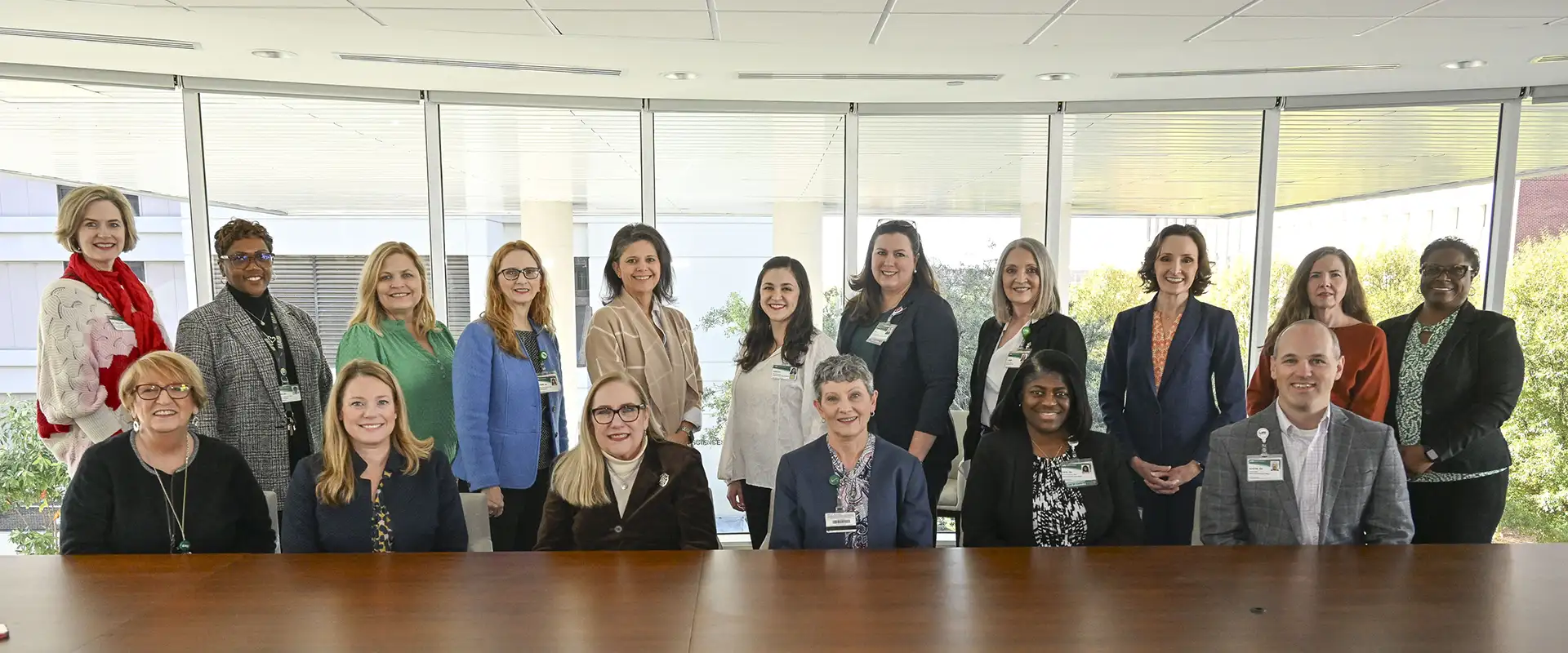
The UAB School of Nursing’s leadership and excellence are reflected in both its clinical and global initiatives. Clinical partnerships date back more than 50 years and, much like the clinical partnerships of today, they cared for medically underserved patients across the lifespan and were clinical training opportunities for students. Global partnerships stretch back more than 30 years, having early collaborative relationships with China, Jordan and Saudi Arabia, and then solidified further in the mid-1990s with the designation as a Pan American Health Organization/World Health Organization Collaborating Centre for International Nursing.
Since 2005, the School has experienced the greatest expansion of its clinical and global partnerships. With the creation of the Office of Clinical and Global Partnerships came a centralized focus on building nurse-managed clinics, key partnerships on and off campus, new residencies for graduates, expansion of faculty practice and ultimately dedicated time and resources to the care for medically underserved populations throughout the state.
Early clinical initiatives
The first UAB School of Nursing nurse-managed clinics and initiatives were established in the early 1970s. There was a nurse-led clinic at the Chapel in the Pines Presbyterian Church led by Dr. Ann Sirles that served families and children; there was another clinic at a high-rise residential facility for the elderly in downtown Birmingham; there were two other School of Nursing clinics at the Metropolitan Gardens and Tom Brown housing communities that saw all of the residents of those federal housing communities that also did home visits and community outreach; and there was a summer clinic in northeast Alabama that served migrant farm workers. All of these laid the foundation for what has become a robust enterprise of nurse-led clinics, community clinical initiatives and faculty clinical practices that serve the people of Alabama.
“The UAB School of Nursing’s partnership mission is not only consistent with the mission of our school, but also consistent with the core values of our profession,” said Dean and Fay B. Ireland Endowed Chair Maria R. Shirey, PhD, MBA, RN, NEA-BC, ANEF, FACHE, FAAN. “Nursing is a caring profession, and through our clinical and global partnerships we are recognized leaders in addressing the health needs of all populations and improving health and health care locally and globally, especially for the medically underserved.”
Nurse-led clinics
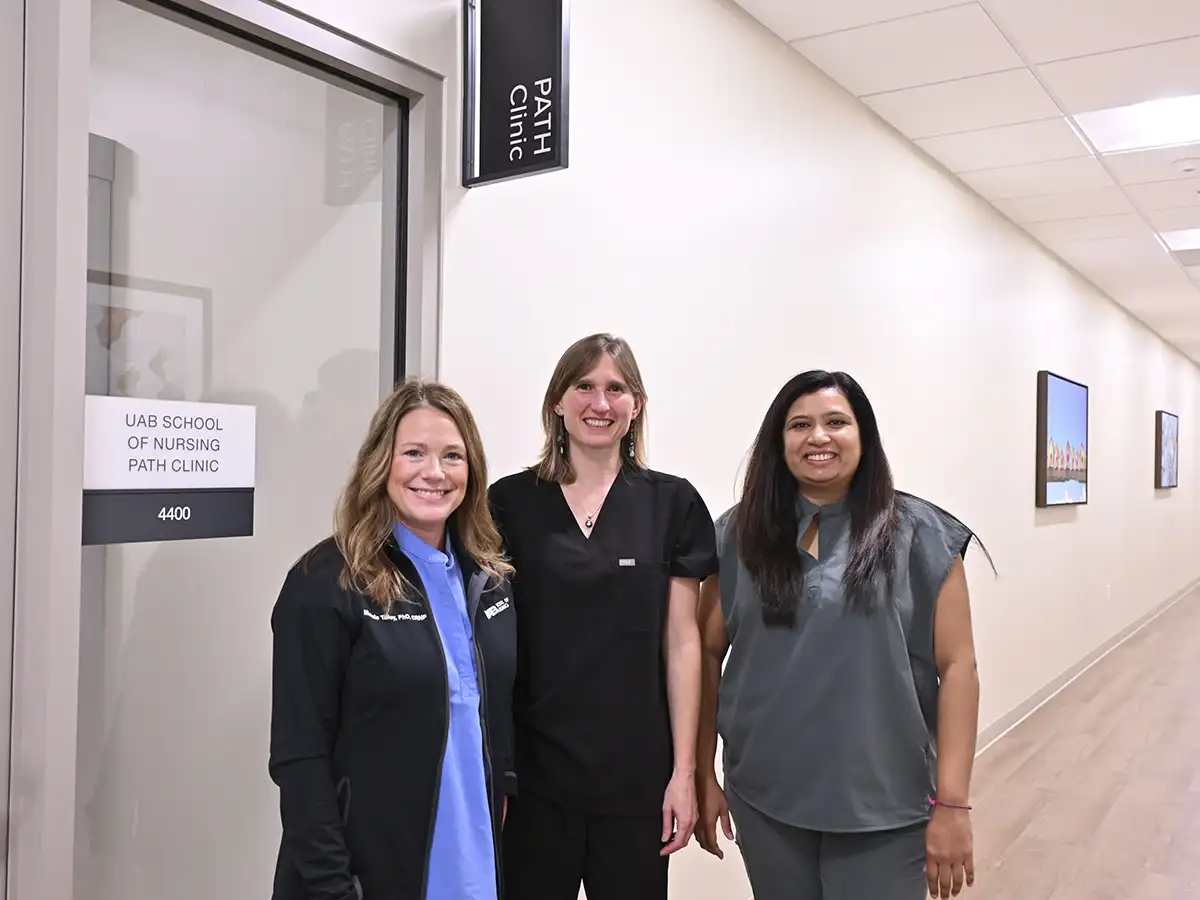
Today the School has seven nurse-managed clinics and initiatives providing primary and specialty care to thousands of medically underserved people across the lifespan in Alabama, including those with diabetes, heart failure, addiction and substance use issues, as well as expectant mothers and their children. The School’s nurse-managed Providing Access to Healthcare (PATH), established in 2012, and HRTSA Heart Failure Clinics, established in 2014, provide interprofessional, team-based care to uninsured or underinsured patients with diabetes and heart failure, respectively, recently discharged from UAB Hospital. In addition to nurse practitioner and physician visits, these clinics provide follow-up care and guidance for improved health to reduce hospital readmissions, while connecting patients with community services. In 2020, PATH and HRTSA jointly received the Creativity in Practice and Education Award from the National Academies of Practice.
In 2018, the School opened its clinic at the WellHouse, a nonprofit organization that provides housing and support to survivors of human trafficking. It is the country’s first and only primary care clinic located inside a residential facility for human trafficking victims and provides free, trauma-informed primary and women’s health care, integrated with behavioral health.
Also in 2018, the School took on its first clients in the Nurse Family Partnership of Greater Alabama, which provides in-home visits to first-time, at-risk mothers throughout their pregnancy and during their child’s first two years of life. Beginning in the Birmingham area, NFP eventually expanded to serve Walker, Winston, Fayette, Marion, Lamar, Shelby and Bibb counties and now, with an $8.8 million Health Resources and Services Administration expansion grant awarded to the project in 2023, is expanding again with the goal of covering 27 additional counties across Alabama. And in 2023, the School and Jefferson County Department of Health received the Exemplary Academic-Practice Partnership Award from the American Association of Colleges of Nursing for their initial collaboration on the Nurse Family Partnership and their collaborative work to improve infant mortality rates and maternal health in Jefferson County.
The School’s clinical partnerships also extend into K-12 schools. Faculty and students provide care to students at i3 Academy, a public K-5 charter school in Birmingham’s Woodlawn Neighborhood. The site also provides pediatric clinical experiences for the School’s undergraduate and graduate students. Additionally, the school embarked on a psychiatric mental health nurse-managed clinic in Bibb County, Alabama to provide behavioral health services for rural Medicare populations.
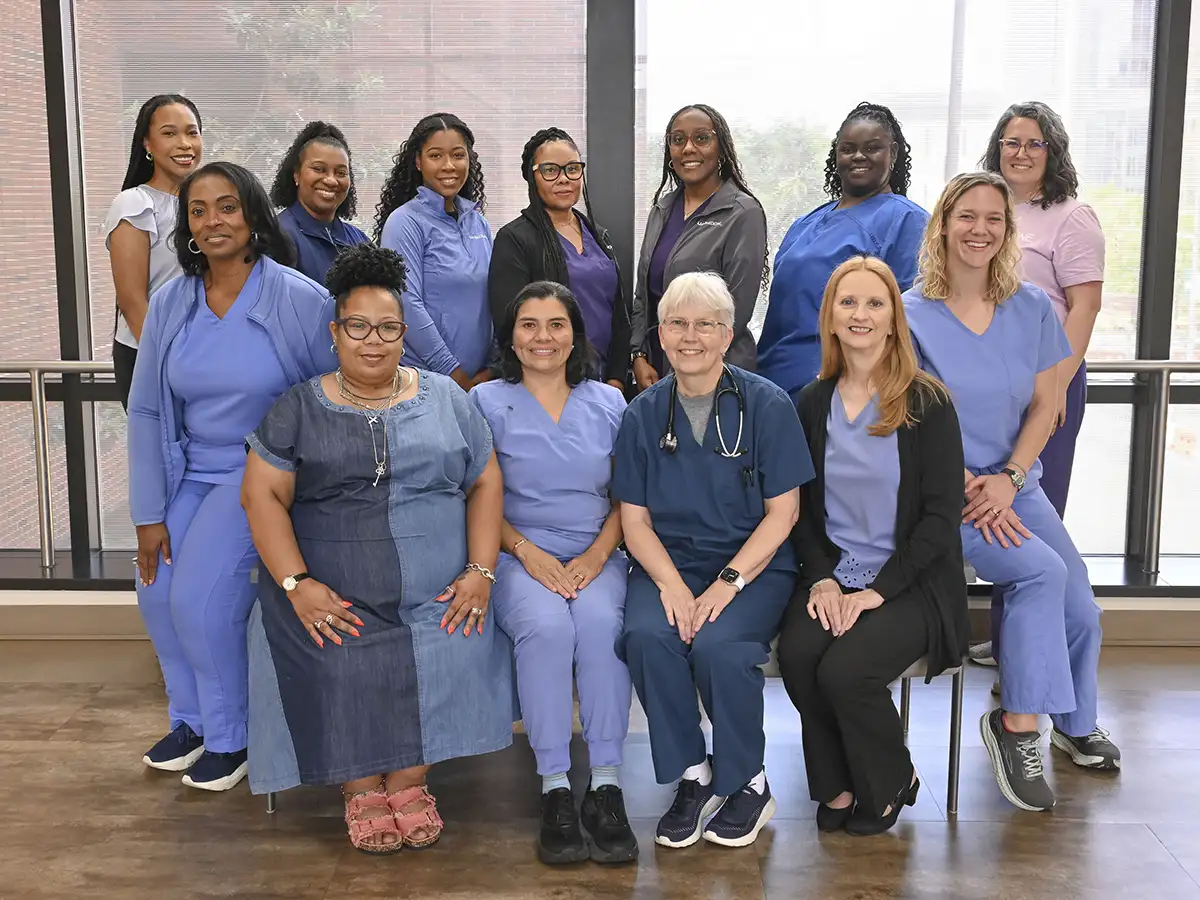
“Our nurse-led clinics and initiatives provide care for uninsured or underinsured patients who might otherwise go without care or have no alternative than an emergency room to seek routine or maintenance care,” said Professor and Associate Dean for Clinical and Global Partnerships Michele Talley, PhD, ACNP-BC, FNAP, FAANP, FAAN (MSN 2005, PhD 2015). “Acknowledging that much of our work in these clinics and initiatives helps lessen the financial strain on hospitals and health care systems through not only the care we provide but also the coordinated services like social workers to help with housing or transportation concerns, or tapping into safety net providers that offer pharmaceutical or medical device cost assistance, this work is about more than the finances. It’s about taking care of people, and the people are the most important part of this equation. As a state institution we have an obligation to the people of Alabama to use our knowledge and skills to improve the health of all Alabamians. These clinics and initiatives do that.”
VA
The School and the Birmingham VA Health Care System have enjoyed a 50-year relationship—one that flourished in 2009 when the School was designated one of 15 original VA Nursing Academy undergraduate education sites in 2009. This became a VA Nursing Academic Partnership a few years later, and today it is home to a Post-Baccalaureate Nurse Residency, a Psychiatric Mental Health NP Residency and Primary Care Nurse Practitioner Residency. The partnership also includes other educational and research opportunities including the Veterans Affairs Nursing Academic Partnership in Graduate Education, Veterans CAN!, and VA Quality Scholars. In 2015, the School and BVAHS received the American Association of Colleges of Nursing Exemplary Academic-Practice Partnership Award for demonstrating an innovative and sustained relationship that extends beyond clinical placements and for demonstrating positive, measurable outcomes and in 2024 the Post-Baccalaureate Nurse Residency and Psychiatric Mental Health NP Residency received Commission on Collegiate Nursing Education accreditation.
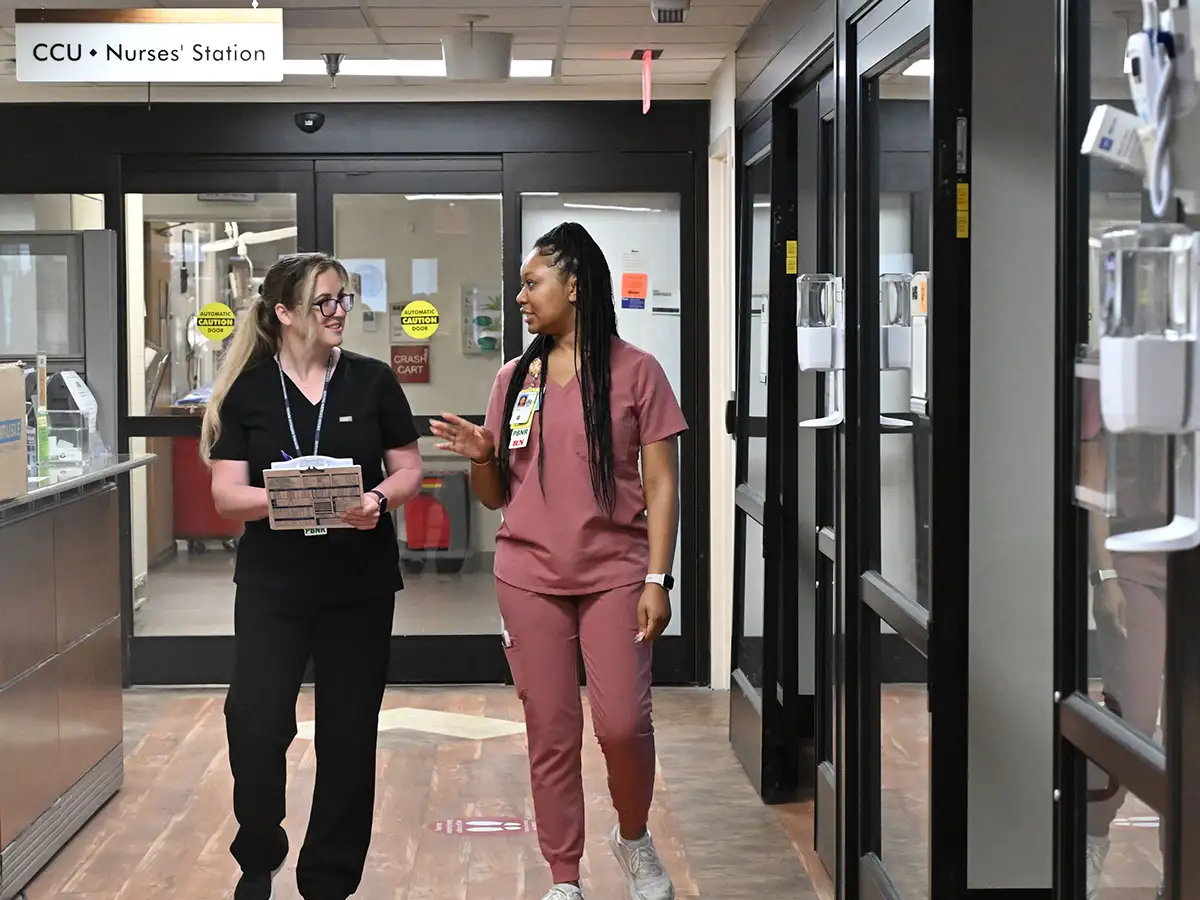
“The VA-UAB Partnership is dynamic, and we are focused on educating the current and future nursing workforce to provide safe, quality care to our Veterans,” said Assistant Professor and Director of VA-Focused Partnerships Tracey Dick, PhD, RN, CNE, COI, CPPS. “Our partnership continues to grow and receive awards, with accreditation chief among the most important. Our continued success is a testament to the dedication of the faculty, staff and everyone involved in caring for our Veterans.”
UAB Nursing Partnership
Clinical, research and education opportunities abound as part of the UAB Nursing Partnership with UAB Hospital and UAB Medicine. It gathers resources from all three entities to accelerate their missions while benefiting students and faculty through research, experience and knowledge. When the partnership was formalized in 2016, it marked an important milestone for the academic/practice partnership and solidified the collaboration and innovation for which UAB is known. It received the 2018 American Association of Colleges of Nursing’s New Era for Academic Nursing Award, its highest academic/practice partnership award. This award recognizes strong academic nursing partnerships that exemplify a spirit of collaboration, integration and support. The UAB Nursing Partnership is a strategic alignment among the UAB School of Nursing, UAB Medicine and UAB Hospital.
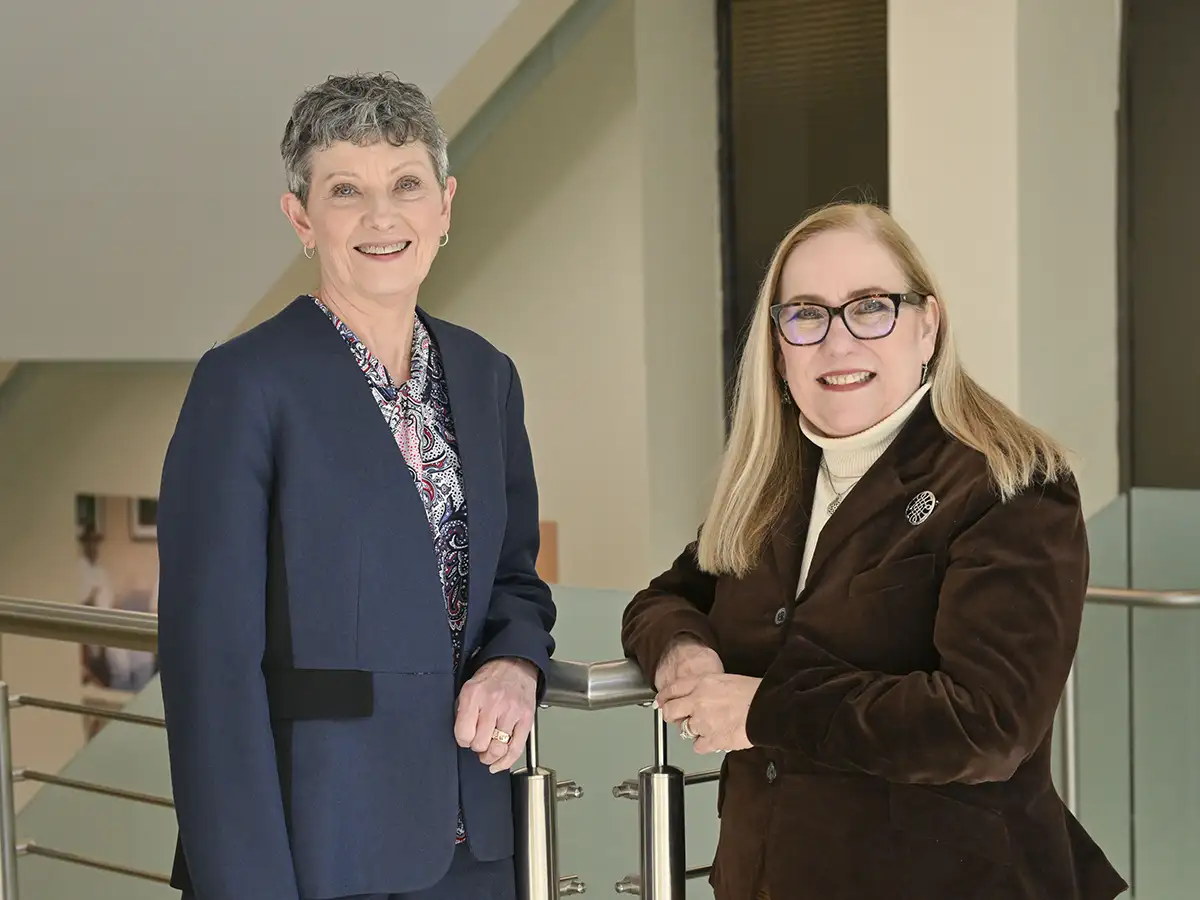
“We have ongoing collaborations to develop solutions to nursing-sensitive topics, knowing that only through the investment in academic and clinical practice can we begin to chip away at concerns that seriously impact patient safety and quality of care,” said UAB Hospital Chief Nursing Officer Terri Poe, DNP, RN, NE-BC (BSN 1986, DNP 2013).
Children’s of Alabama
The School also partners with Children’s of Alabama with faculty teaching 10 onsite nurses each year to organize and conduct their own evidence-based projects. This program builds leadership capacity among Children’s of Alabama nurses and health care professionals and enhances quality care in clinical practice. In the past decade, 10 cohorts of nurses totaling 132 participants, have completed the program that includes a comprehensive in-person curriculum designed to cultivate nurses’ expertise in quality improvement and leadership, aligning their skills with the evolving demands of contemporary health care settings.
“For these nurses, the Scholars Initiative is a transformative journey where knowledge meets practice with a focus on cultivating bedside nurse leaders who aspire to elevate health care through evidence-based excellence,” said Program Co-Director, Professor and Interim Assistant Dean, Graduate Clinical Education – DNP Tedra Smith DNP, CRNP, CPNP‐PC, CNE, CHSE (MSN 2004, DNP 2011), during the celebration of the program’s 10th anniversary.
Global partnerships
With the establishment of the Pan American Health Organization/ World Health Organization Collaborating Center (PAHO/WHOCC) for International Nursing the School has become pacesetter in global health initiatives, primary health care and quality improvement in nursing education. Since 1993, it has been redesignated every four years, with the most recent in 2023. Over the past 30 years there have been more than 20 collaborative agreements between the School and universities across 14 countries, providing valuable opportunities for educational collaboration and scholarship for both the partner institutions and the School.

Professor and PAHO/WHOCC Co-Director Adelais Markaki, PhD, RN, FAAN, joined the School in 2016 and the following year she led a Global Health Task Force of faculty and staff tasked with developing the UAB School of Nursing Framework for Global Health Action. Under Markaki’s purview, the School’s International Visiting Scholars Program was expanded and streamlined, enabling select international faculty, post-doctoral fellows, clinicians, nursing administrators and PhD students to gain valuable short-term experiences in advanced nursing education, research and practice through individualized mentorship. Since 2010, more than 30 Scholars from eight countries have completed the program. The collaborations also have led to the development of several training resources for nurses and nursing schools in the PAHO region, including the Educational Quality Improvement in Nursing and Midwifery Programs Toolkit, designed to help nursing schools assess their programs. With input from other WHO collaborating centres in Latin America and the Caribbean on content development and cultural adaptation, the School launched this free, asynchronous, distance-accessible course and continues to refine its content with partner input.
“The UAB School of Nursing has worked diligently over the years not only to remain a PAHO/WHO Collaborating Centre but, more importantly, toward the overall goal of improving global health,” Markaki said about the most recent redesignation. “We have been able to complete past activities with the resources and faculty available through the School as well as through international partnerships. This team effort paired with the vision from Dean Shirey, and Deans Harper and Booth before her, as well as our Advisory Board, has enabled the School to become a leader in the Americas. The UAB WHOCC leads the Pan American Nursing and Midwifery Collaborating Centers, a network of 16 Centers that advance universal health and foster cooperation on a regional level.”
The future
Talley said big things are on the horizon for the future of clinical and global partnerships.
One initiative includes the growth of the Leadership and Health Policy Initiative, which has leveraged the School’s exceptional leadership and health policy work under a single umbrella, and formally invested in training faculty, students and community nurses to lead nursing and health care change at all levels.
“We are growing leaders through the Leadership and Health Policy Initiative to become politically savvy in order to make recommendations to lawmakers and other decision-makers on how to streamline health care delivery, improve patient safety, patient outcomes and nursing practice and education,” said Associate Professor, Co-Coordinator of the Family Nurse Practitioner Specialty Track and Director of the Leadership and Health Policy Initiative D'Ann Somerall, DNP, MAEd, CRNP, FNP-BC, FAANP (BSN 1995, MSN 1999, DNP 2011). “This initiative ensures more and more nurses are prepared to help create change and our impact on health and health care is sustainable for the future.”
The other, a project led by Talley, is the launch of the Moms and Kids Mobile Health Clinic, a specially designed RV that is traveling to rural counties in Alabama providing and facilitating access to health care for women, infants and children who might not otherwise have it.
“This effort is in response to the urgent maternal and infant health care needs in rural Alabama,” Talley said. “We are expanding access to maternal care—including prenatal, pregnancy and postpartum services—as well as child and behavioral health services for families. Our goal is not to take patients away from their home county or hometown provider, but to be a resource for patients and our healthcare colleagues to help all Alabamians receive quality health care, especially our vulnerable rural communities.”
“The UAB School of Nursing is at the forefront of academic-practice partnerships,” Shirey said. We have a long track record of success because of our willingness to understand what patient and health care system needs are and craft partnerships that address these. Partnerships are second nature to us. Beyond today, they will continue to grow and put us where the public health needs are and where the talented people of our School can best contribute. We are stronger working together than when we work alone. That’s really our secret to the success of our partnerships.”
-Jennifer Lollar