Leaders from the Department of Radiology gathered to commemorate the installation of UAB's new GE StarGuide system, a technology expected to expand molecular imaging capabilities and improve access to advanced diagnostic and theranostic care for patients across Alabama.
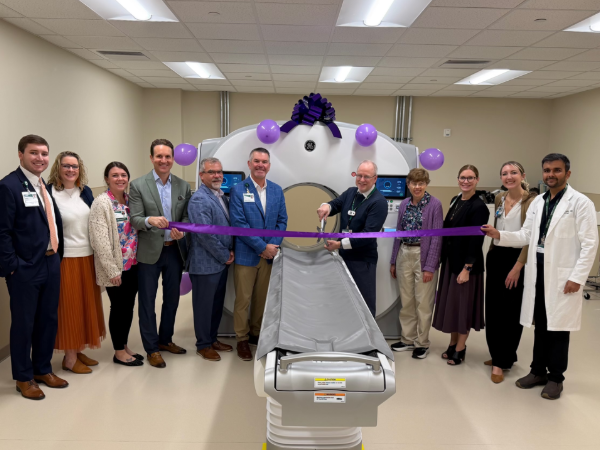
The ribbon-cutting event brought together clinical and administrative leaders from the department. Participants included Deepak Kalbi, M.D., assistant professor and interim director of the Division of Molecular Imaging and Therapeutics; Sharon White, Ph.D., professor in the Division of Imaging Physics; Erin Yarbrough, associate vice president of clinical operations; Morgan Gaghen, senior director of imaging operations; Jeff McGough, senior director of imaging services; Daniel Yoder, manager of molecular imaging; and other leaders from radiology and imaging operations.
The technology, a 360-degree cadmium-zinc-telluride multi-SPECT/CT system, was installed over a three-week period beginning in Oct. 2026. It is the first and only system of its kind to be installed in Alabama. The technology is designed to provide more precise and sensitive imaging across a variety of disease processes while supporting both clinical care and research initiatives.
"This new imaging technology allows for faster, high-resolution, three-dimensional imaging and positions us to continue expanding our clinical and research programs," Yoder said.
For patients, one of the most noticeable benefits will be shorter scan times. Exams that have traditionally required 45 minutes or longer can often be completed much faster, with some scans taking as little as one-quarter of the time previously required. Faster imaging not only improves the patient experience but also allows the department to serve more patients each day.
The system is expected to have a significant impact on cancer care and theranostics, a rapidly growing field that combines diagnostic imaging and targeted therapies. Because the technology is optimized to image many of the same agents used to treat cancer, physicians can gain valuable information to help guide treatment decisions and evaluate how therapies are working.
As UAB continues to expand its theranostics program, the system’s operations will provide clinicians with detailed imaging data that can help connect patients with the most appropriate treatment options.
The Division of Molecular Imaging and Therapeutics led the implementation of the technology and will continue to oversee its operation and development. In addition to improving image quality and clinical decision-making, the system is expected to increase imaging capacity, improve scheduling efficiency, and expand patient access by allowing more patients to be scanned each day.