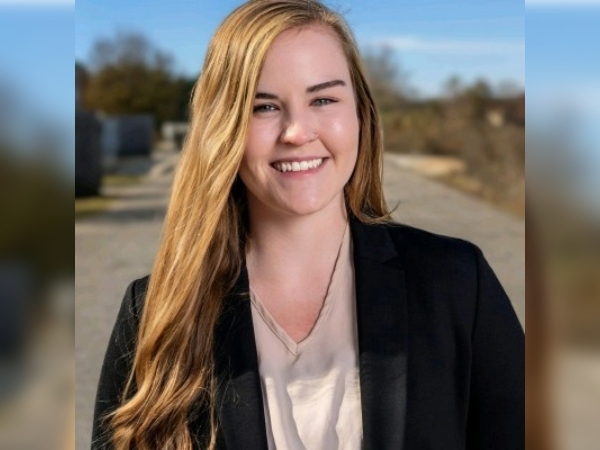
 Kristina McMahan, Ph.D.The UAB Department of Psychiatry and Behavioral Neurobiology recently welcomed Kristina McMahan, Ph.D., as an assistant professor in the Division of Adult Psychiatry.
McMahan completed her undergraduate studies in psychology with a minor in biology at the University of North Alabama, where she was mentored by Larry Bates, Ph.D. She then earned her doctoral degree in medical/clinical psychology from UAB under the mentorship of Sylvie Mrug, Ph.D.
Learn what inspired McMahan to pursue a career in psychology, what excites her most about joining the UAB Department of Psychiatry and Behavioral Neurobiology, and how she hopes to expand access to evidence-based mental health care through clinical innovation, research and mentorship.
Can you share your professional background and experiences prior to joining our institution?
McMahan: After completing my undergraduate degree, I worked as a research assistant focused on substance use for a year and a half. That experience inspired me to continue my work in substance use and ultimately motivated me to pursue graduate school. I continued to focus my research on substance use, which allowed me to build on previous experiences while developing a deeper understanding of the field. I completed my internship at the Birmingham VA Medical Center, where I gained valuable clinical skills in working with the veteran population. After completing my internship, I knew that I had to come back to UAB. I value the breadth of career opportunities available here alongside the ability to continue growing and exploring different areas of work within an institution that has been such an important part of my professional development.
What is your primary area of expertise within your field, and what sparked your passion for it?
McMahan: Clinically, my area of expertise centers around working with individuals experiencing suicidality, Functional Neurological Disorder (FND), PTSD, and generalized anxiety. Although these diagnoses may appear incredibly different on the surface, what connects them is the opportunity to help people who are experiencing significant distress and disruption to their lives. My passion for this work developed through seeing the levels of suffering lift when folks have access to thoughtful, evidence-based care. I am particularly drawn to suicide-focused work and FND because there are important gaps in our understanding of these conditions, treatment options can be limited, and treating these conditions challenges me to remain open to emerging evidence. I find that a combination of complexity and opportunity is especially meaningful, and I value being able to work at the intersection of research and clinical care. Ultimately, my passion is driven by a desire to reduce suffering, expand access to effective and evidence-based care, and do my best work based on the science that we have today.
What inspired you to pursue a career in this field?
McMahan: I’ll never forget walking into my general psychology class in undergrad and having my professor say, “Just because you’re good at listening to people doesn’t mean you should go into psychology. Science matters; now let’s learn it.” That sparked my interest in research and led me to find a love for helping people that was based on the best science that we had at the time. This same value still drives my passion for the field of psychology today.
What aspects of your new role here are you most excited about?
McMahan: I’m most excited about creating a new clinic that will fill in a gap within the department alongside collaborating on building and strengthening existing clinics. One of the greatest features of the Heersink School of Medicine is the opportunity to build, grow, and be creative in doing so.
What are your goals for making an impact through both your teaching and patient care in this role?
McMahan: My hope is to be involved in teaching lectures, seminars, and mentoring supervisees throughout my tenure at HSOM. Having recently completed my training, I have a strong belief that supervisees are the future of the field. So, spending time cultivating and growing their clinical skills will not only improve access to care, but it will also transcend the work that I can do as one provider. Heersink’s supervisees will graduate and lead impactful careers. It warms my heart knowing that my efforts in teaching and supervising will play an integral part in lasting and widespread impact as they graduate and move across the country to start their independent careers.
Anything else you’d like to add?
McMahan: Staying connected to your purpose is important throughout your education and beyond. For me, it’s a quote that helps guide my career. I have it framed on my desk: “Know all the theories, master all the techniques, but as you touch a human soul just be another human soul.”