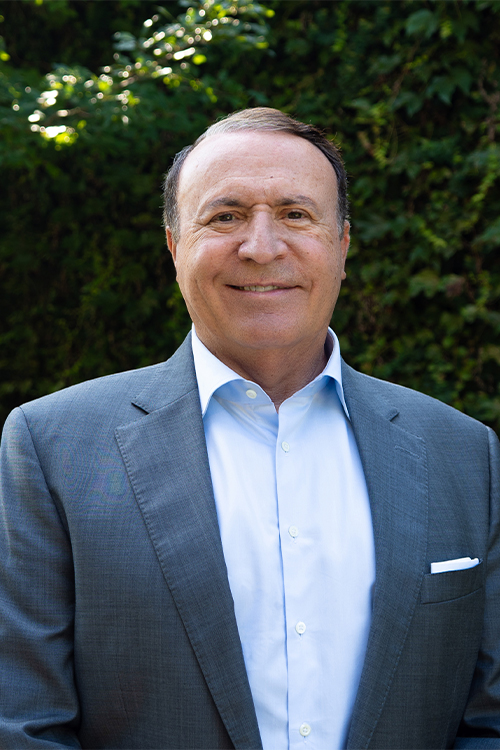
Swaid Swaid, M.D., reflects on a career influenced by great teachers and guided by compassion
A year of celebration and innovation, 1976 saw many historic events: Americans were honoring the country’s bicentennial, computed tomography (CT) scanning was introduced, and Apple manufactured one of the first fully assembled personal computers.
And in Birmingham, Alabama, newly minted physician Swaid Swaid, M.D., graduated from The University of Alabama School of Medicine, now the UAB Heersink School of Medicine.
The Importance of Mentorship
Swaid remembers influential professors during his time at UAB, one of whom changed the trajectory of his career.
“I came to UAB with the idea that I would like to do cardiovascular surgery,” he said. “Within the first few months, I ran into Dr. Garber Galbraith, the chief neurosurgeon. I loved the subject matter he taught and the way in which he taught it. I decided to switch to neurosurgery and pursued that desire until the very end.”
He also found kinship with famed physician Tinsley Harrison, M.D., considered by many to be the father of internal medicine.
“Dr. Harrison was a very dear and close mentor of mine,” Swaid said. “When he reached the point where he no longer wanted to drive out of town, I often drove him. That gave us many hours together, and he had a tremendous influence on me. He taught me many things about the subject matter but also about life in general.”
50 Years of Neurosurgery
In the last 50 years, the field of neurosurgery has seen what Swaid calls “magnificent changes,” particularly when it comes to diagnostics. He said that early on, decisions were made based on clinical analysis of the patient's history, the physical examination, and the experience their professors had with specific types of cases.
“Everything we did was based on neuroanatomy until we got the CT and later the MRI scanner, which changed the way we approach medicine,” he said. “We began to see things that we had guessed about but never really visualized.”
Other technology in terms of localization of pathology within the brain has caused physicians to be safer and more direct in approaching a problem, he said, adding that these changes have come about because of innovation—much of which happened because of and at UAB.
Swaid is passionate about advances in technology that allow for less invasive surgical procedures while at the same time being cost-effective. For example, Swaid played a critical role in bringing the Gamma Knife to Birmingham—a noninvasive, radiosurgical instrument used to treat brain tumors, vascular malformations, and nerve disorders.
As Swaid looks back on recent years—including innovations with stem cells—he also looks forward to new advancements, particularly in addressing diseases that previously had no treatment options.
“I'm very interested in deep brain stimulation, done by implanting devices within the brain, to influence behavior, mood, and perhaps some neurodegenerative diseases or movement disorders,” he said. “These are the things that I think are going to be amazing in the future.”
Focusing on the Patient
While technological advances have brought about positive changes in medicine, Swaid said that they may have separated the surgeon from the fundamentals of the profession, like the connection with the patient.
“I think that's the danger of the new diagnostics,” he said. “When I walk into a patient's room, often I already know what the problem is.”
For this reason, he said that physicians may not see a need to talk to the patient as much. Swaid stresses the importance of conversation and said there is no substitute for making a personal connection. “It can pay off in many ways and may even change your mind about the diagnosis,” he said.
“As we become detached from personal interactions, we begin to think of medicine as technology coupled with finance and business,” he said. “I like to tell all the physicians that I encounter or have some influence over to remember that the patient is the centerpiece of what we do.”
As part of his patient-centered philosophy, Swaid is concerned about the loss of access to healthcare in rural areas as well as overcrowding in larger, urban hospitals. “Both of these problems are decreasing the efficiency of the delivery of care to patients,” he said. “I am now working on ways to rectify this, and a major approach is through the building of ambulatory surgical centers (ASCs). ASCs can reduce the volume of in-hospital surgical procedures and decrease hospital congestion, while affording patients excellent outcomes and significant cost savings.”
A Lifetime of Accomplishments
Swaid has employed novel techniques and treatments for a wide range of issues, including cranial surgery, radiosurgery, and treatment of trigeminal neuralgia and cervical spine disorders, even taking on challenging cases from other countries. However, he said one of his greatest accomplishments is one that you won’t read about in the news or see on his resume.
“When I took my oral boards in neurological surgery, which is sort of the very last step you take before you become a board-certified neurosurgeon, I was in New Orleans surrounded by neurosurgeons from all over the country,” Swaid said. He began to wonder how he might stack up against his peers.
In the end, he more than held his own. “To have come out on top of that whole heap that day just brought tears to my eyes—and I realized that I trained in an amazing place,” he said proudly. “I walked out of there so grateful to have spent my residency at UAB.”
While there’s no denying his intelligence and raw talent, Swaid gives credit to the place that launched his journey into medicine. “That's always been a source of pride for me, professionally—that someone can graduate from UAB and pitch with the best of them based on our education and training here in Birmingham.”
Advice for the Future
With all his training and accomplishments over the years, his best advice goes back to the basics—caring for the patient.
“If everything you do has to do with the well-being of the patient and making them the focal point, then everything else will take care of itself, he said. “Practice good medicine, make the patient the focus, and always think about how we can make the patient experience better.”