 At the CFDE Fall 2026 Meeting, researchers and National Institutes of Health leaders examined an emerging challenge for biomedical science: AI agents can find and combine information at extraordinary speed, but the scientific community must still be able to determine where their answers came from and whether they can be trusted.
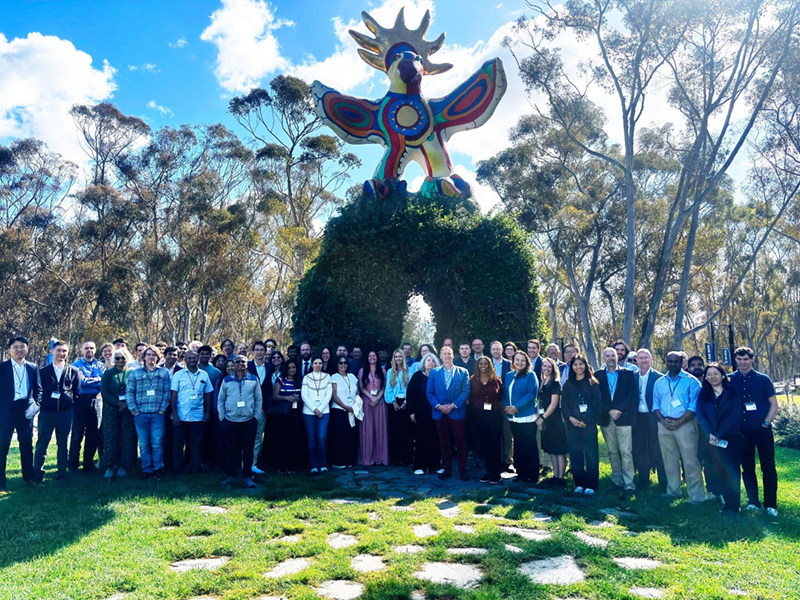
More than 80 researchers, data scientists, and NIH program leaders registered for the Common Fund Data Ecosystem Fall 2026 Meeting, held Oct. 13-14 at the University of California San Diego. The meeting was organized by CFDE CONNECT, the UAB-led Integration and Coordination Center for the NIH Common Fund Data Ecosystem, together with partners across the CFDE community.
The gathering came as artificial intelligence is beginning to change not only how biomedical data are analyzed, but also who — or what — consumes them, a shift no single program can address alone.
“AI agents can generate scientific answers in seconds. Checking those answers is now the hard part,” said Jake Y. Chen, Ph.D., Triton Endowed Professor in the Department of Biomedical Informatics and Data Science, founding director of UAB’s Systems Pharmacology AI Research Center (SPARC), and contact principal investigator of CFDE CONNECT.
Chen co-hosted the meeting with Shankar Subramaniam, Ph.D., of UC San Diego, whose team welcomed the community to campus. The program brought together CFDE centers, Common Fund data programs, and NIH representatives for two days of scientific demonstrations, working sessions, and planning focused on the future of the data ecosystem.
The challenge is increasingly important. NIH Common Fund programs generate valuable biomedical resources spanning molecular maps, human tissues, metabolism, genetics, and other complex biological systems. The CFDE is designed to make resources across these programs easier to find, connect, and reuse. CFDE CONNECT works alongside these programs to coordinate the ecosystem through cross-program collaboration, evaluation, community activities, and planning for the long-term sustainability of data and resources.
At the fall meeting, that mission increasingly intersected with AI.
Participants explored emerging approaches, including Model Context Protocol servers, agent skills, and AI “co-scientists.” The implications extend beyond making existing databases easier to query. As computational agents increasingly discover, combine, and reason across biomedical information, scientific data must include sufficient provenance and structure for researchers and machines to determine where a claim originated, what evidence supports it, and whether the result can be reproduced.
“Harmonized, provenance-rich data that both people and agents can trust is now scientific infrastructure, not a nice-to-have,” Chen said.
Building an ecosystem for people and AI
Across the meeting, teams from throughout the CFDE shared concrete examples of how the community is responding together.
A Tech Showcase featured 13 live demonstrations across four parallel tracks, covering knowledge graphs and semantic integration; data portals and knowledge bases; visualization and user interfaces; and computing platforms for cross-program analysis.
Among the technologies presented was the CFDE Talent Knowledge Graph, demonstrated by Chen and Zhandos Sembay, an informatics analyst in SPARC. The project maps investigators and research outputs across the ecosystem, offering a new way to understand scientific reach, discover expertise, and identify connections across programs.
Five cross-center CFDE working groups also convened to advance shared work on ontology, knowledge graphs, evaluation, training, and communication and outreach. Other sessions explored partnerships, sustainability, expansion of the CFDE user community, and opportunities emerging from agentic AI.
Together, the discussions highlighted an important transition. Biomedical data infrastructure was traditionally designed primarily for researchers searching databases, downloading data sets, and running analyses. Increasingly, that infrastructure must also support intelligent computational systems capable of navigating and reasoning across multiple resources.
That shift makes the ability to connect data with evidence, provenance, standards, and human expertise increasingly important — and it is work best done collectively.
From trustworthy data to AI-enabled discovery
The emerging challenge creates a natural connection between CFDE CONNECT’s national data coordination mission and the growing biomedical AI research community at UAB and its partner institutions.
At SPARC, Chen and collaborators are developing AI-driven approaches to systems pharmacology and drug discovery, including digital biology, generative and agentic AI, and patient digital twins. The center brings together computational and biomedical researchers around a broader goal: accelerating the translation of biological knowledge and data into more effective approaches to therapeutic discovery and precision medicine.
Recent SPARC research illustrates why trustworthy scientific information matters as AI systems become more autonomous.
A SPARC team has dem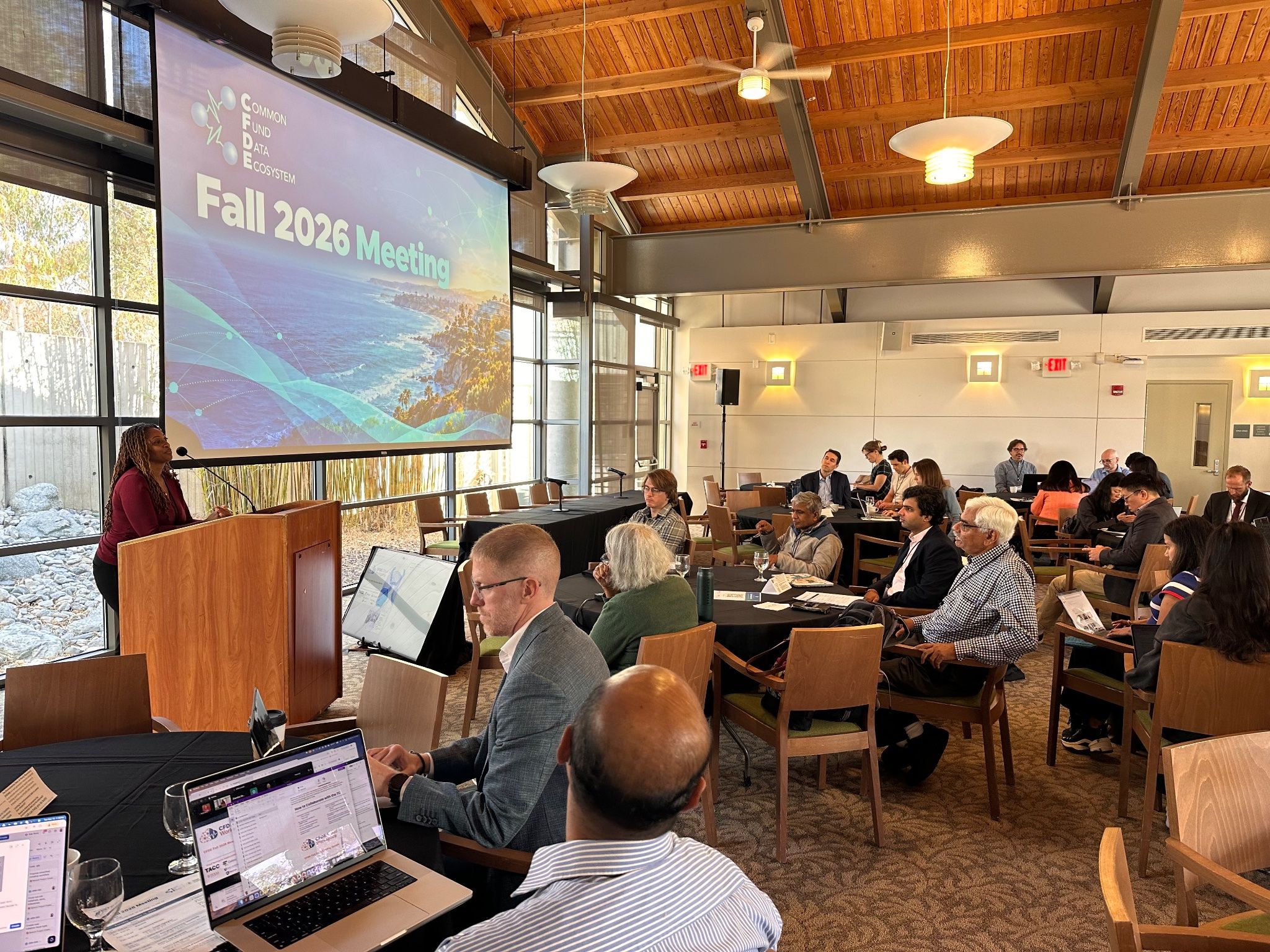 onstrated a multiagent approach capable of navigating multiple stages of early drug discovery, including mining scientific literature, identifying therapeutic targets, and generating and evaluating candidate molecules. Such systems can explore scientific and chemical information at a scale that would be difficult for an individual researcher to replicate.
Their growing capabilities also expose a fundamental limitation: AI can reason only as reliably as the evidence, data, and models available to it allow.
That reality connects SPARC’s work with the broader issues facing the Common Fund Data Ecosystem.
More capable AI does not reduce the importance of high-quality biomedical data. It makes trustworthy, traceable, and reusable data even more consequential.
For UAB and its collaborators, this convergence presents an opportunity to contribute at two complementary levels: Through CFDE CONNECT, the university works with partner institutions and Common Fund programs to coordinate an ecosystem that makes biomedical data and resources more connected, sustainable, and useful. Through SPARC, UAB researchers and their collaborators investigate how advanced AI systems can transform biomedical knowledge into new discoveries.
Together, those efforts point toward a larger question for biomedical science: What infrastructure will researchers need when humans and AI agents increasingly work together to make scientific discoveries?
CFDE CONNECT is working with the research community to address that question by bringing programs, data resources, technologies, and researchers together across the NIH Common Fund Data Ecosystem.
Led by UAB through NIH award U54OD036472, CONNECT is a multi-institution partnership with collaborators at the University of Colorado Anschutz Medical Campus, UCLA, and the University of Arizona. Chen serves as contact principal investigator.
“The opportunity is bigger than making biomedical data easier to find,” Chen said. “We need to create a scientific ecosystem in which researchers and AI can work with data responsibly, trace the evidence behind their conclusions, and ultimately turn knowledge into discoveries that improve human health.”
Researchers, data scientists, and organizations interested in exploring CFDE resources, joining the community, or identifying opportunities for collaboration are invited to visit CFDE CONNECT to learn about CFDE working groups, community activities, and ways to connect with Common Fund data programs.