 As the use of obesity medications continues to grow, researchers are increasingly focused on an important question: how can adults lose weight without losing too much muscle?
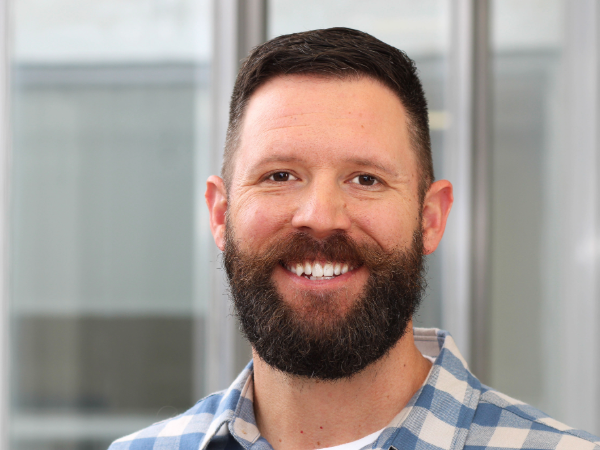
Leveraging a five-year, $3.7 million grant from the NIH, a new clinical trial led by Drew Sayer, Ph.D., assistant professor in the UAB Department of Family and Community Medicine, is exploring strategies for improving obesity treatment for aging adults.
Sayer’s study comes at a critical time for Alabama, where not only nearly 39% of adults, including 43.6% of adults ages 45-64, have obesity but more than one-third of the population is aged 50-75. For aging adults, weight loss can improve cardiometabolic health, but excessive muscle loss may threaten physical function and independence.
The study, “Optimizing adaptive intensive behavioral therapy for obesity during the transition to older adulthood,” will investigate how behavioral weight loss interventions can help adults ages 50-75 achieve clinically meaningful weight loss while preserving skeletal muscle mass and strength.
“Testing strategies to attenuate the loss of lean mass—especially skeletal muscle—during weight loss is a very hot topic in obesity research, particularly as more people are using obesity medications,” explained Sayer. “This may be especially important in older adults who may already have low muscle mass and strength. There is significant concern that older adults may lose too much skeletal muscle while losing weight, which could impact their strength and physical function.”
Adults between 50 and 75 years old often experience a high burden of obesity-related chronic diseases while also facing an increased risk of sarcopenia, the age-related loss of muscle mass, quality, and strength. While losing even modest amounts of weight can significantly improve blood pressure, blood sugar, and cholesterol levels, researchers are increasingly focused on ensuring that weight loss interventions do not unintentionally lead to muscle loss.
“Losing muscle mass and strength can impact the ability of older adults to complete activities of daily living and maintain their independence longer,” Sayer said. “In older adults with obesity and low skeletal muscle mass and strength, weight loss would be expected to improve cardiometabolic health, but these benefits could be offset by reductions in functional capacity resulting from the loss of muscle and strength.”
To address this challenge, the trial will use a Sequential Multiple Assignment Randomized Trial (SMART) design, an approach allowing researchers to adapt treatment strategies based on an individual participant’s response.
Study participants will initially be randomized to either a high-protein or standard-protein calorie-restricted diet. After eight weeks, researchers will assess each person’s progress and determine whether additional support is needed. Those who are not responding optimally will then be randomized to receive one of two intervention strategies: protein supplementation or supervised resistance exercise training.
“Higher-protein diets and resistance exercise training both impact the synthesis and breakdown of skeletal muscle protein, possibly in a synergistic manner,” said Sayer. “This study will test dynamic treatment regimens comprising diets of different dietary protein composition with either protein supplementation to support the higher-protein diet prescription or supervised resistance exercise training to stimulate muscle protein synthesis and increase muscular strength.”
“Essentially, we want to determine the combination and sequence of intervention strategies that maximizes weight loss while preventing excessive loss of lean tissue.”
Every study participant will receive intensive behavioral therapy for obesity, including 16 weeks of weekly group sessions followed by nine months of monthly maintenance sessions.
The trial builds upon years of obesity and body composition research conducted by Sayer and his collaborators.
Sayer’s trial brings together a multidisciplinary team of experts in obesity treatment, behavioral interventions, and data science. Family and Community Medicine Vice Chair of Research and Improvement Science, Tapan Mehta, Ph.D., will serve as a key collaborator, with Adele Fowler and the research team leading study analyses. Longtime collaborators and mentors Holly Wyatt, M.D., and James Hill, Ph.D., developed the foundational weight management program, State of Slim, that will serve as the behavioral framework for the project. Katie Ellison, Ph.D., will contribute as both a scientist and interventionist, while James Friedman will assist with study coordination.
The trial will be conducted at the Wellness, Health And Research Facility (WHARF), part of the Center for Engagement in Disability Health and Rehabilitation Sciences (CEDHARS), with additional support from the Metabolism Core and the Behavioral and Clinical Interventions Core of UAB’s Nutrition Obesity Research Center.
By identifying the most effective and adaptable behavioral treatment strategies, researchers hope to establish new evidence-based approaches for obesity management during a critical stage of aging.
Findings from the study are expected to advance the understanding of how clinicians can help older adults achieve weight loss goals while preserving the muscle strength and function needed to maintain long-term health and independence.