 A former member of the clinical and research teams, Lauren Picken will start medical school this fall.For nearly two years, Lauren Picken has been a steady presence in UAB’s Department of Family and Community Medicine—first caring for patients in the clinic, then supporting primary care research. This fall, she will take the next step in her journey when she leaves Birmingham to begin medical school. It is a path shaped not only by her work at UAB but by her own search for a diagnosis.
“My path to medicine was shaped by living with an undiagnosed illness for more than a decade, an experience that taught me what it truly means to be a patient navigating uncertainty,” Picken explained. “Through my undergraduate education and clinical research involvement, I learned to apply evidence-based medicine to take an active role in my own care and significantly improve my health. That process showed me the power of combining scientific knowledge with attentive, patient-centered care. It ultimately inspired me to pursue medicine so I can guide patients through complex health journeys with empathy and partnership.”
As she prepares to enter the Lake Erie College of Osteopathic Medicine-Bradenton, Picken reflects on her time at UAB, her growing passion for caring for rural and underserved communities, and the perspective she hopes to bring into her future practice.
What initially drew you to work in a family medicine clinic?
Picken: During my undergraduate time at UAB, I worked across multiple medical specialties, but I was most drawn to family medicine for its diverse patient population. I saw it as the ideal setting to build strong clinical foundations while providing comprehensive care. What I value most is the continuity of care, which allows the clinical team to build lasting relationships and engage in meaningful, long-term interactions with patients.
While working in the clinic or as a researcher, was there a patient interaction that made a lasting impact on you?
Picken: I have worked with thousands of patients through clinical research and as a patient care technician, and each interaction has left an impression. The most lasting impact, however, was the hope patients gave me especially on days when I felt discouraged by the challenges of the journey. Hearing patients say they felt heard or believed I would make a good physician motivated me to keep moving forward. It reinforced my desire to become a physician who offers that same sense of hope and reassurance to patients during difficult times.
How did working in research expand or change the way you view medicine?
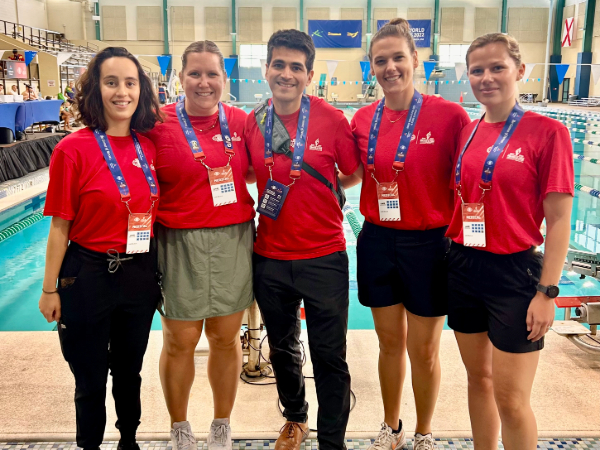 Picken poses alongside department medical providers at the World Police and Fire Games.Picken: Working in research showed me how evidence directly shapes patient care. It taught me to question assumptions and appreciate that clinical decisions are built on both scientific rigor and patient context. Research also highlighted the importance of equitable representation, reinforcing that medicine is not one-size-fits-all. As a result, I approach medicine with a mindset that values curiosity, evidence-based practice, and continuous improvement to better serve patients.
Can you talk about where your interest in serving under-resourced areas began?
Picken: I grew up in a rural area with limited access to specialty care. While managing a chronic, undiagnosed illness, my family often had to travel long distances to receive the care I needed. Experiencing those barriers firsthand, along with the emotional and financial strain they placed on my family, showed me how deeply access gaps in access affect health outcomes. That experience shaped my commitment to serving communities where resources are limited and to becoming a physician who helps patients navigate care with compassion and advocacy.
Was there a particular patient, story, or barrier to care that highlighted the need for rural-focused physicians?
Picken: Yes. I frequently encountered patients who delayed care due to long travel distances, limited transportation, or a lack of local specialists. Many waited until conditions worsened because accessing care required significant time, cost, or time away from work. Seeing how geography alone could determine health outcomes underscored the need for dedicated rural physicians. It reinforced my commitment to practicing in communities where access, not motivation, is the primary barrier to care.
How do you think your hands-on patient care and research background will influence the kind of doctor you hope to become?
Picken: My experience in both patient care and research have given me a strong understanding of how healthcare systems work and where patients often fall through the cracks. Because I have spent years learning these systems firsthand, I am prepared to step in quickly, support care teams, and advocate for patients from the start of my training. This background allows me to apply evidence-based medicine while navigating real world barriers to care. I am ready to make a meaningful impact early and continue bridging gaps in patient care as a physician.
When you imagine yourself as a physician, what does that look like?
Picken: When I imagine myself as a physician, I see someone who makes an impact in every patient’s life, regardless of the problem they’re facing. My goal is to create at least one meaningful, positive change for each patient I encounter. I hope to work in rural and underserved communities while also continuing my work with veterans. I chose an osteopathic medical school because I am drawn to using both traditional and alternative approaches to support the body as a whole, giving patients more options to manage their symptoms and improve their overall well-being. I plan to approach medical school with an open and unbiased mindset so I can discover the specialty where I can leave the greatest and most lasting impact on my community.
For Picken, the lessons learned in Family and Community Medicine will guide her as she works toward serving rural patients as a future physician.
"Thank you to the entire UAB Family and Community Medicine team… Every person welcomed me with kindness and generosity, leaving a lasting impression on how I view medicine and the type of physician I aspire to become. The compassion and dedication I witnessed in the clinic taught me the true meaning of patient-centered care, while the research team inspired me to think creatively, embrace innovation, and continue to grow within academic medicine. I am deeply grateful for the mentorship, encouragement, and inspiration that shaped my journey in ways I will carry with me throughout my career."