The future of research in the Department of Anesthesiology and Perioperative Medicine is being shaped by a new generation of investigators whose work spans cancer symptom science, maternal-fetal health, vascular biology, and obstetric anesthesia. While their research interests differ, these up-and-coming researchers share a common goal: translating scientific discovery into meaningful improvements for patients. Through innovative use of technology, advanced laboratory methods, clinical research, and multidisciplinary collaboration, they are helping expand the department's impact while strengthening its mission to advance knowledge, improve care, and train the next generation of physician-scientists and research leaders.
Hailey Bulls, Ph.D.
 Hailey Bulls, Ph.D.Hailey Bulls, Ph.D., assistant professor in the Department of Anesthesiology and Perioperative Medicine, recently returned to UAB after completing clinical and research training at leading institutions across the country. A graduate of UAB’s Medical Clinical Psychology Ph.D. program, she completed her clinical internship at the James A. Haley VA in Tampa, followed by an NCI R25-funded postdoctoral fellowship in behavioral oncology at Moffitt Cancer Center. Before returning to Birmingham in September 2025, Bulls spent six years on the faculty at the University of Pittsburgh and UPMC Hillman Cancer Center, where she advanced her research focused on cancer pain and symptom management. Now back at UAB, she brings a wealth of expertise in behavioral oncology and a passion for improving the lives of patients living with cancer.
Please give a broad overview of your recent research efforts within the department.
Bulls: Briefly, I am in the final year of my NCI K08 award, in which we are pilot testing a digital, asynchronous intervention for pain management in patients with advanced, painful cancer. More recently, I am working on new studies to determine the optimal cognitive/behavioral treatment targets for chronic cancer pain in survivorship, using personalized pain modeling; explore relationships between chronic cancer pain and weight in the exciting era of GLP-1 therapy; and build a translational model that leverages basic science, patient-reported outcomes, and machine learning models to better predict symptom onset during early disease.
What inspired you to conduct this research?
Bulls: I was immediately drawn to the puzzle of chronic pain when I arrived in graduate school, with its complex relationships between biology, psychology, and social factors. However, it wasn’t until later in my training that my grandmothers were diagnosed with cancer – one with early-stage breast cancer and a promising prognosis, the other with advanced leukemia and less than a year to live – bringing cancer to the forefront of my personal experience. As our grandmothers weighed their options, I began to appreciate the complexity of cancer pain and the importance of maintaining quality as well as quantity of life. I also came to understand the complexities of cancer and its treatment, the many ways that a cancer trajectory can deviate from its expected path, and how cancer symptomatology can vary significantly from person to person – leading to significant heterogeneity in the success of pain management efforts. I am inspired by the improvements in cancer outcomes thanks to screening, diagnosis, precision medicine, and treatments, and I envision a similar improvement in cancer symptom management.
What are your short and long-term research goals?
Bulls: In the short term, my goal is to leverage technology and high-density real-world data to better understand the mechanisms underlying cancer pain. My lab uses tools like wearable devices, asynchronous telehealth/video interventions, and ecological momentary assessments (which ping directly to participants' phones) to understand what the day-to-day life of cancer pain really looks like and where we might best intervene. In the long term, my goal is to develop a personalized, precise approach to cancer pain management that delivers the right intervention to the right person, at the right time.
Sarav Murugesan, Ph.D.
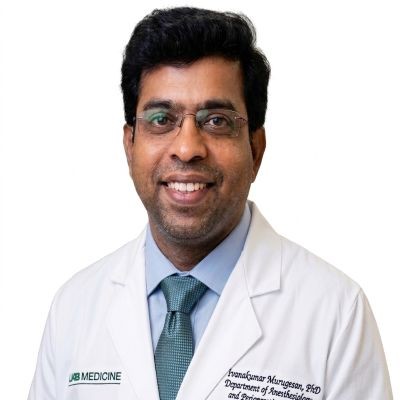 Sarav Murugesan, Ph.D.Sarav Murugesan, Ph.D., instructor in the Department of Anesthesiology and Perioperative Medicine, has built his research career at UAB, where he has spent more than seven years advancing from postdoctoral fellow to faculty instructor in the Department of Anesthesiology and Perioperative Medicine. Since joining the department in 2019, Murugesan has developed a highly multidisciplinary research program focused on cardiovascular dysfunction and extracellular vesicle biology in preeclampsia. He credits much of his professional growth to the mentorship and support of Dan E. Berkowitz, M.B., B.Ch., professor and chair, whose guidance helped him progress from trainee to independent investigator. Today, Murugesan is continuing to expand his research efforts while contributing to the department’s mission of advancing discovery and improving patient care.
Please give a broad overview of your recent research efforts within the department.
Murugesan: My research centers on vascular physiology, extracellular vesicle (EV) biology, and cardiovascular disease models, with a primary focus on preeclampsia and endothelial dysfunction. Specifically, my laboratory investigates how EV-mediated communication, key regulatory proteins like Vasorin (VASN), and multi-pathway signaling mechanisms (such as TGF-β and Activin A) influence vascular reactivity, placental function, and fetal outcomes. We integrate cell-specific mouse models, single-cell calcium imaging, wire myography, and advanced biomarker modeling to uncover novel diagnostic markers and therapeutic targets for gestational vascular disorders.
To bridge fundamental discoveries with clinical applications, our program integrates basic mechanistic models, cutting-edge physical sciences, and direct patient-oriented translational research:
Basic and pre-clinical sciences: We utilize cell-specific mouse models, isolated single-cell cardiomyocyte calcium imaging/contractility (IonOptix), cellular bioenergetics, and wire myography to decipher how placental stress and anti-angiogenic factors impair vascular tone, nitric oxide bioavailability, and left ventricular mechanics.
Patient sample repository and biomarker modeling: We have established a robust clinical biorepository comprising plasma, serum, placental tissue, and isolated EVs from well-characterized patient cohorts (normotensive pregnancies vs. early- and late-onset PE). Using these human samples, we apply machine learning frameworks (e.g., logistic regression and random forest algorithms) to build and validate multi-marker diagnostic panels for early PE risk prediction.
Non-invasive clinical vascular profiling: In close collaboration with maternal-fetal medicine and clinical research teams, we deploy advanced non-invasive technologies—such as the VENDYS II system for digital thermal monitoring of microvascular endothelial function—in pregnant patients. This allows us to quantify real-time endothelial health and arterial compliance in vivo, correlating systemic vascular dysfunction directly with circulating bio-signatures and long-term postpartum cardiovascular trajectories.
What inspired you to conduct this research?
Murugesan: I have long been fascinated by how cell-to-cell communication networks act as the body’s internal messaging system, particularly during complex physiological challenges like pregnancy. PE and associated vascular complications remain significant clinical challenges with limited target therapies. The potential to decipher these EV signaling pathways—and ultimately translate laboratory findings into meaningful diagnostic tools and clinical interventions that improve maternal and fetal health—drives my dedication to this field.
What are your short- and long-term research goals?
Murugesan: Short-term: Fully delineate the targeted deletion models of placental VASN, complete ongoing translational biomarker cohorts, and secure independent extramural funding (R01) to support our mechanistic and clinical PE studies.
Long-term: Establish an internationally recognized research program in EV biology and vascular therapeutics, bridging basic translational discoveries directly to perioperative and maternal-fetal medicine.
Anything else you'd like to let people know?
Murugesan: I am deeply grateful for the vibrant, collaborative environment within the Department of Anesthesiology and Perioperative Medicine at UAB. High-impact translational research is fundamentally a team endeavor, and I want to recognize the dedication of my collaborators, lab team, and my wife, Lakshmi, who manages our laboratory research alongside me while balancing family life with our two young kids. Most importantly, I express my profound gratitude to my mentor and department chair, Dr. Dan E. Berkowitz. His unwavering faith in my scientific vision, coupled with his steadfast mentorship, provided the foundation for my professional evolution from a postdoctoral fellow to an independent principal investigator and faculty member.
Linda Zhang, D.O., Ph.D.
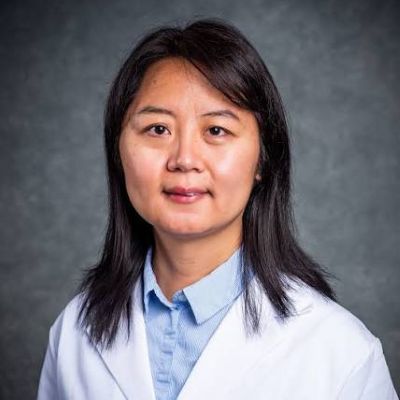 Linda Zhang, D.O., Ph.D.Linda Zhang, D.O., Ph.D., assistant professor in the Department of Anesthesiology and Perioperative Medicine, has combined a strong foundation in basic science with a growing focus on clinical research throughout her training at UAB. After earning a Ph.D. in Molecular Biology and Biochemistry before medical school, she joined UAB’s anesthesiology residency program in 2020 and became actively involved in research. During residency, Zhang returned to laboratory-based investigation and later completed a research fellowship within the Department of Anesthesiology and Perioperative Medicine. Her research interests have since expanded to include clinical studies in obstetric anesthesia, reflecting her commitment to advancing both scientific discovery and patient care.
Please give a broad overview of your recent research efforts within the department.
Zhang: My recent research has focused on extracellular vesicles and their role in acute lung injury. I have also been developing clinical research projects in obstetric anesthesia, particularly in postpartum pain management, opioid-sparing approaches, and recovery after cesarean delivery.
What inspired you to conduct this research?
Zhang: I enjoy working on questions that have a connection to clinical care. My basic science background gave me an interest in understanding disease mechanisms, while clinical training has helped me identify practical questions that may be studied and potentially improve patient care.
What are your short and long term research goals?
Zhang: In the short term, I hope to continue developing clinical research projects in obstetric anesthesia and collaborate with colleagues across anesthesiology and obstetrics. Long term, I would like to maintain a research program that connects basic and translational science with clinically relevant questions in obstetric anesthesia and perioperative medicine.
Anything else you'd like to let people know?
Zhang: I have been fortunate to work with supportive mentors, collaborators, residents, fellows, and students at UAB. I look forward to continuing these collaborations as my research develops.