David Miller, M.D., vice chair and director of the Division of Critical Care Medicine in the UAB Department of Anesthesiology and Perioperative Medicine, has been named the 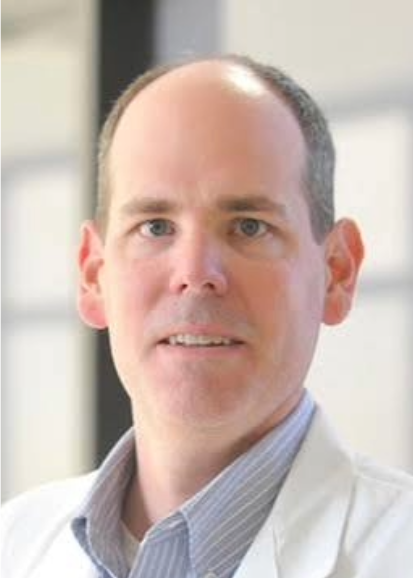 David Miller, M.D. inaugural Mali E. Mathru, M.D., Endowed Faculty Scholar for Anesthesiology. The position was established to honor the career of Mali Mathru, M.D., and to provide lasting support for a faculty member advancing research, education, and clinical innovation in anesthesiology and critical care medicine.
Miller's appointment carries a particular resonance: Mathru himself served as the first vice chair of the Division of Critical Care in the Department of Anesthesiology, a role Miller now holds. Over a career spanning more than five decades, Mathru trained fellows, mentored junior faculty and built a research program spanning upper airway obstruction during anesthesia, reperfusion injury, ventilator-induced lung injury and remote ischemic preconditioning, authoring more than 100 peer-reviewed publications along the way. The endowed scholar fund named in his honor is designed to carry that legacy of mentorship and discovery forward, supporting a faculty member whose own path mirrors the one Mathru forged.
“I’m deeply honored to be named the inaugural Mathru Scholar,” Miller said. “Dr. Mathru’s leadership helped shape this division. Stepping into a role he once held makes this recognition especially meaningful. This support will help us advance research and clinical innovation for the sickest patients in our ICUs, and I’m grateful to everyone whose generosity made it possible.”
Miller is an alumnus of the University of Nevada School of Medicine and completed both his residency and a fellowship in the UAB Department of Anesthesiology and Perioperative Medicine. He has since built his career at UAB, where he now also serves as medical director of the Neurosciences ICU. His research and clinical interests center on critical care medicine, subarachnoid hemorrhage and lung physiology, work that informs how the department cares for some of its most complex, highest-acuity patients.