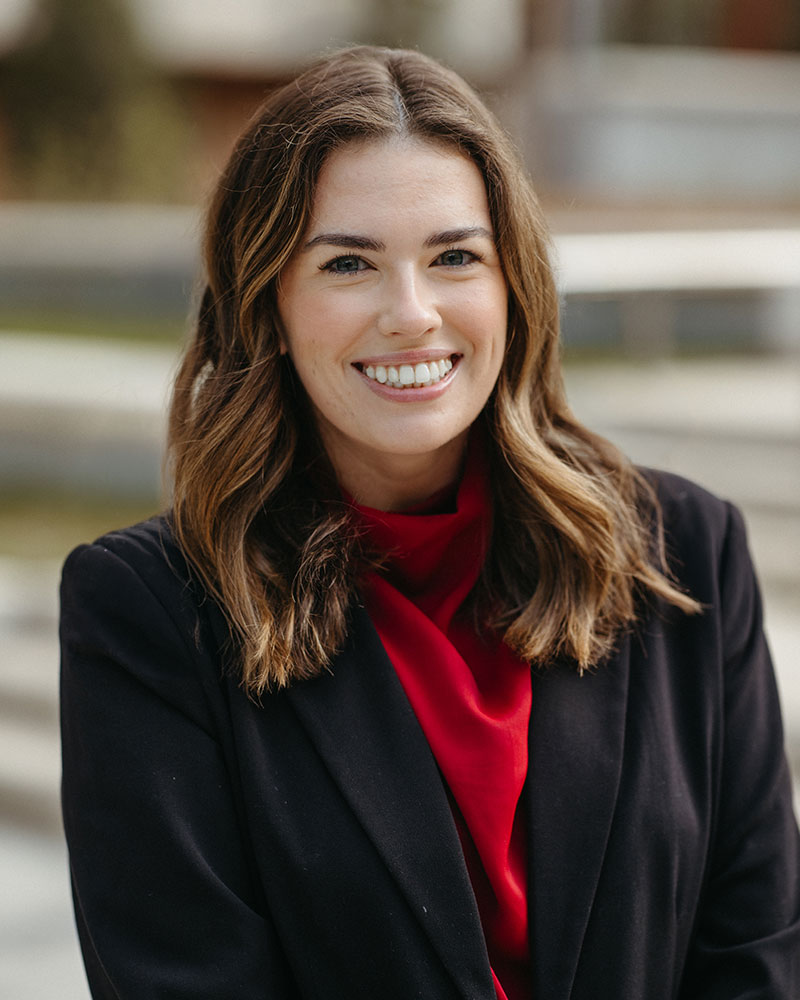
Jenny Keogh didn't expect an internship at Blazer Kitchen to shape the course of her career. Trained in public relations and advertising, she became increasingly interested in the connection between communication and health, a path that ultimately led her to pursue a Master of Public Health (MPH) at UAB.
While undertaking her MPH, Keogh discovered an opening for Blazer Kitchen at a public health internship fair, where she aimed to bring her communication experience to the forefront. Growing up, she frequently volunteered at food banks and food kitchens, developing both an understanding of and a passion for helping those facing food insecurity.
“I figured, what needs does the kitchen have that a communication background could help with?” Keogh recalls. “How can you reduce as many barriers that people either perceive or actually do face? How can we orient people and give them all the information that they need to get the most out of this benefit that they qualify for?”
This led her to organize a pantry orientation program for Blazer Kitchen, giving new and prospective shoppers information about how to use the pantry and its procedures, while aiming to reduce misconceptions that students, employees, and patients might have about their access to Blazer Kitchen. Additionally, she enlisted in numerous shifts as a volunteer to help package food and supplies for shoppers.
“It was a really nice bridge between communication, health behavior, and food insecurity,” says Keogh. “I think the internship really did a good job merging [public health and communication] because it was all about how you communicate to a first-time shopper.” She expresses that her public health classes emphasize “meeting people where they are” as a framework for addressing human behavior. This led her to implement this mindset into communication regarding the pantry orientation program.
Even though she had prior experience volunteering for food pantries, she still found herself pleasantly surprised at how much Blazer Kitchen provides. “My assumption was that you're limited to canned chicken and a thing of minute rice,” she recollects. “There's really so much more that you're able to get out of it,” referencing the fresh produce, frozen foods, seasonings and spices, and various toiletry items Blazer Kitchen offers shoppers. “I also really didn't think about the hygiene products and things like pads, tampons, deodorant.”
Keogh recognizes the role universities play in addressing food insecurity: “Regardless of your background, interest, major, anything like that, food is still needed to support your lifestyle. And everyone has to eat.” Blazer Kitchen provides an opportunity for the university community to address this need together.
Keogh's journey to an MPH was shaped in part by what she learned at Blazer Kitchen: that health is influenced by far more than what happens in a clinic or classroom. Through orienting shoppers to the pantry and its services, she saw how a simple act of welcome can help people feel supported during difficult circumstances. Support the Benevolent Fund today and help ensure that Blazer Kitchen remains a place where members of the UAB community can access essential resources with dignity and respect.