Key Insights
UAB researchers are working to improve air quality at a Birmingham high school. For many of the team members, the stakes are unusually high.
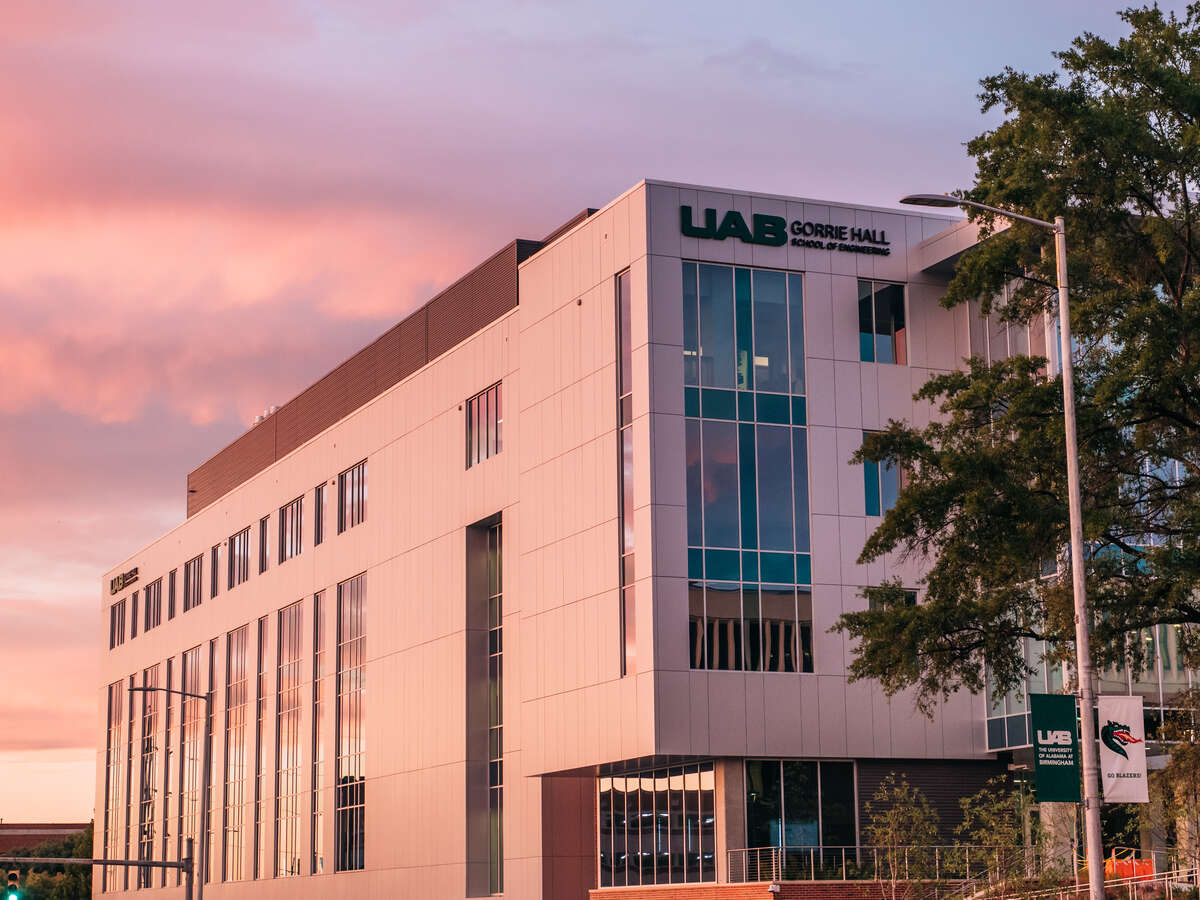 This community partnership will allow the project’s positive impacts to continue in perpetuity. Researchers from the University of Alabama at Birmingham School of Engineering are working alongside the staff at BuildUp Community School in Titusville, Alabama, to evaluate and improve air quality in the school. To meet the project’s demands, the researchers enlisted the help of current BuildUp students to mitigate air pollution in the school.
“Students are learning the science and engineering behind air quality while simultaneously doing the hands-on work to make their own environment safer,” said Mark Banaszak Holl, Ph.D., associate dean of Research for the UAB School of Engineering and professor in the Department of Mechanical and Materials Engineering. “With the students serving as partners in the project, we are giving them tools they need to create a healthier environment for themselves, future generations of students and the broader Titusville community.”
In addition to Banaszak Holl, the UAB team includes Jialei Shen, Ph.D., and Moiz Usmani, Ph.D., both of whom are assistant professors in the Department of Civil, Construction and Environmental Engineering and in the UAB School of Public Health. Shen will focus on the indoor air quality, while Usmani will focus on outdoor air quality and modeling. Jason Kirby, Ph.D., and Ian Berg, Ph.D., assisted students with the construction of air-purifying devices in the Design x Prototyping Lab.
The project is one of five funded by the UAB Center for the Study of Community Health, with the goal of supporting projects with “strong potential for external funding and sustained community impact.” The funding is meant to help launch the project and support its efforts for one year.
How does the environment play a role in Birmingham’s air quality?
“Because of the city’s location in a valley, Birmingham allows for a specific air-quality condition called thermal inversion, where warm air essentially acts as a lid, trapping cooler, stagnant air at ground level,” Banaszak Holl said.
Locations all over the world experience poor air quality at certain times of the year when concentrations of particulate matter are high.
“On days with poor air quality, we are advised to stay indoors — but the fact is that, in many of our older buildings, the air quality inside is not much better than the air quality outside,” Banaszak Holl said.
This proved to be the case at BuildUp. In the initial phase of the project, Shen worked with the student team to install air-quality sensors in several rooms inside the school, including the cafeteria and a science classroom. Measurements of particulate matter rose and fell, corresponding roughly to measurements from outdoor sensors in North Birmingham and often exceeding them.
After gathering data in the school over the first four months of the year, Banaszak Holl shared the results with BuildUp Principal Brearn Wright. His answer was immediate: “Let’s get to work! How do we fix this problem now?”
How do we create a low-cost air purifier to improve air quality?
BuildUp science teacher Briana Collins and student A.J. McCrary spent the summer looking at data and putting plans in place to mitigate the air quality in the school before the new school year.
Working alongside UAB faculty, they built a device called a Corsi-Rosenthal box — an air purifier that can be constructed using common, low-cost materials such as a box fan and residential air filters. The box was installed in Collins’ science classroom, and the results were both immediate and dramatic. For the rest of the summer, measurements of particulate matter in the classroom were below outdoor levels and were well below the standards set by the Environmental Protection Agency and the World Health Organization.
This fall, Collins’ environmental science class spent a morning in UAB’s Design x Prototyping Lab constructing a dozen Corsi-Rosenthal boxes for other parts of the school.
What can fresh air do for student performance?
High levels of particulate matter have been linked to many health problems, including asthma and cancer. But Wright says poor air quality can have a major impact on student performance. That is why the work being done by this senior class is so important.
“Briana Collins has integrated this project directly into the instruction of her 12th-grade class,” Wright said. “Her students will collect and analyze real data and building models, and they will be connecting what they see to real health outcomes.”
“The objective here is not for us to identity a problem and then move on,” Banaszak Holl said. “We want the students to learn how to fix the problem at the school and then identify how they can translate their new engineering skills to their community.”
“From here on, this becomes a part of how we teach,” Wright said.
This community partnership will allow the project’s positive impacts to continue in perpetuity.